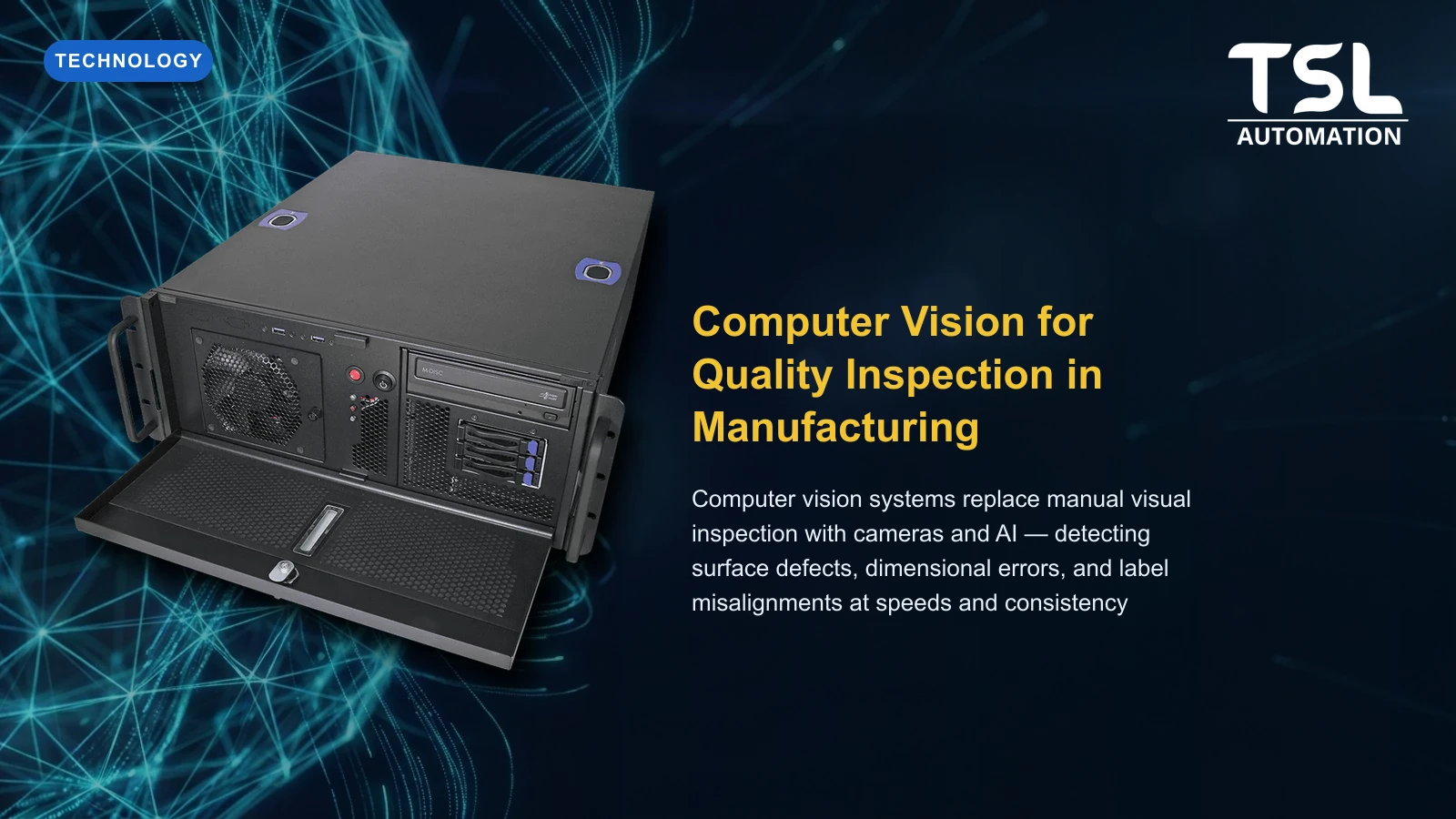
Visione artificiale per il controllo qualità nella produzione
Indice dei contenuti
Why Automate Quality Inspection?
Manual visual inspection is slow (typically 1 a 3 seconds per part), inconsistent (inspector fatigue causes missed defects after 2 hours), and expensive (dedicated headcount for every line). Computer vision inspects at line speed (hundreds of parts per minute), with consistent accuracy across a full 8-hour shift, and generates a data record of every inspection for traceability.
How a Machine Vision System Works
- Camera, captures a high-resolution image of each part (area scan, line scan, or 3D)
- Lighting, controlled, consistent illumination (LED ring, backlight, structured light) to highlight defects
- Processor, AI model or traditional blob analysis detects defects, measures dimensions, or reads codes
- I/O, triggers a reject mechanism or alarm when a defect is found
Types of Defects Vision Systems Detect
- Surface scratches, dents, cracks, and porosity
- Dimensional out-of-tolerance (height, diameter, gap)
- Missing components or incorrect assembly
- Label misalignment, incorrect barcode, or missing print
- Colour variation and gloss defects
Hardware Requirements for Machine Vision
A machine vision PC must process high-resolution images with minimal latency. Typical requirements:
- Intel Core i5, i7 processor (for traditional vision) or GPU (for deep learning AI)
- PCIe frame grabber card matching your camera interface (GigE, USB3, Camera Link, CoaXPress)
- 16 a 32 GB RAM for large image buffers
- NVMe SSD for fast image storage and archiving
- Fanless or positive-pressure chassis to keep optics and electronics clean
TSL Automation supplies Avalue industrial PCs with PCIe expansion for frame grabbers and AI GPU cards, configured specifically for machine vision deployments in Indian manufacturing.
Domande frequenti
TSL Automation Solutions
Responsabile marketing, TSL Automation Solutions
Sanjana si occupa di tendenze dell'automazione industriale, lanci di prodotto e approfondimenti tecnologici per TSL Automation Solutions, distributore con sede a Mumbai di HMI, Panel PC e sistemi di computing embedded al servizio dei produttori in India e nel mondo.
Ha bisogno di aiuto per scegliere il prodotto giusto?
Il nostro team di Mumbai può consigliarle l'HMI, il Panel PC o il sistema embedded giusto per la sua applicazione.
Contatti TSL Automation