
Tecnologías táctiles para HMI industrial: resistiva, capacitiva y PCAP comparadas
Índice de contenidos
Resistive Touch
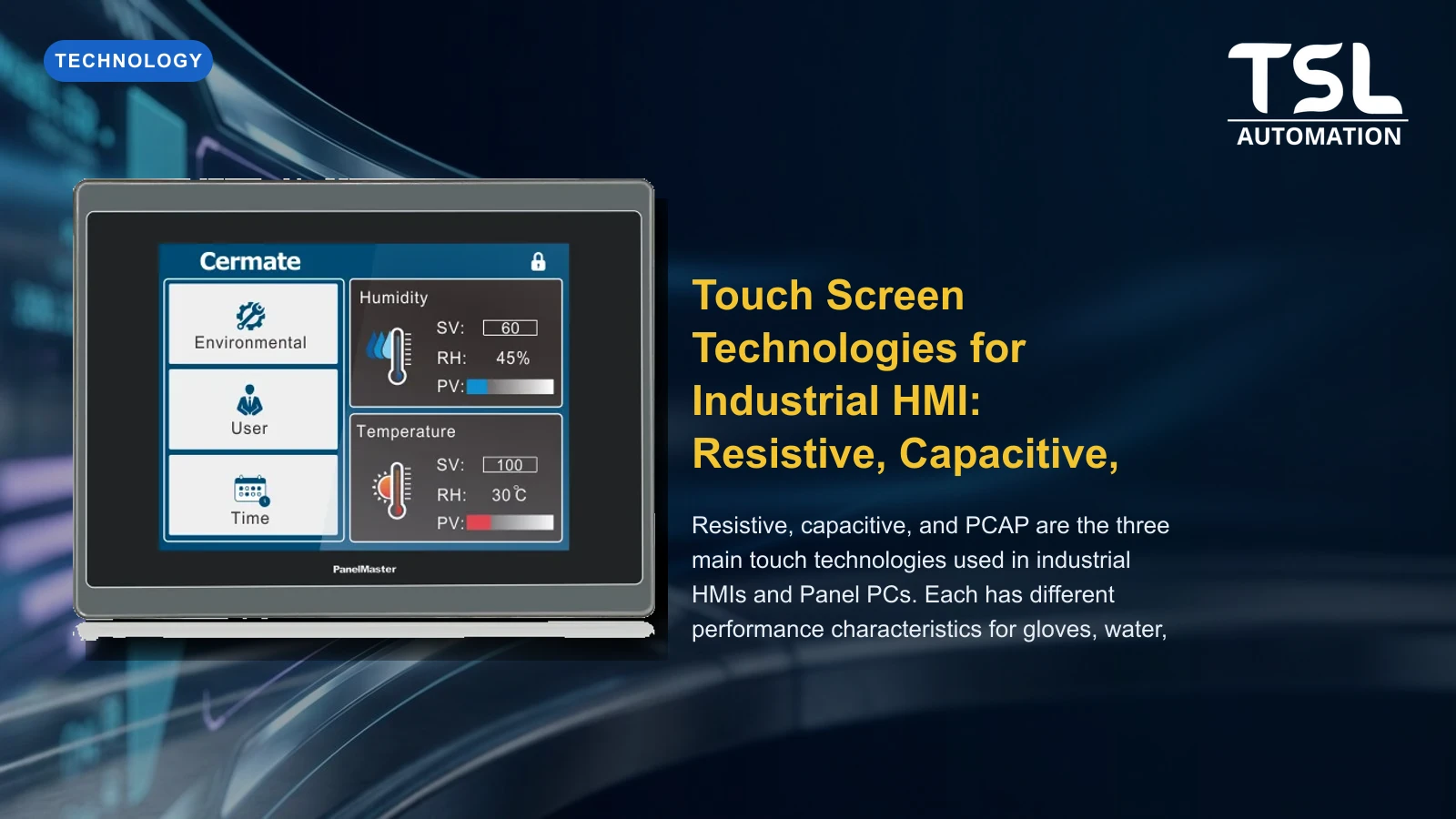
Resistive touch screens work by detecting physical pressure on the screen surface, a flexible top layer pressed against a resistive bottom layer completes a circuit at the touch point. Key characteristics:
- Works with any pointing object, gloved fingers, stylus, pen
- Unaffected by water droplets or moisture on the screen
- Single touch only (no multi-touch gestures)
- Lower resolution than capacitive
- Scratches over time from repeated use with hard objects
- Best for: harsh environments, chemical splash, thick gloves
Capacitive Touch
Capacitive touch detects the electrical capacitance of a finger, it will not respond to non-conductive objects or standard rubber gloves. Key characteristics:
- High sensitivity and fast response
- Can support multi-touch with the right controller
- May false-trigger from water on the screen
- Requires bare skin or special conductive gloves
- Best for: clean environments, operator consoles without gloves
PCAP (Projected Capacitive) Touch
PCAP is an advanced capacitive technology that projects an electrostatic field through the glass surface. Modern PCAP controllers include water-rejection algorithms (distinguish a water drop from a finger), glove-detection modes, and multi-touch support. PCAP has become the standard for new industrial HMI and Panel PC designs, combining high responsiveness with robust environmental performance.
Which Touch Technology to Choose
| Scenario | Recommended Touch |
|---|---|
| Rubber glove use (chemical plant) | Resistive |
| Wash-down environments | PCAP (with water rejection) |
| Standard factory operator panel | PCAP |
| Extreme cold (frozen gloves) | Resistive or PCAP (glove mode) |
Preguntas frecuentes
TSL Automation Solutions
Directora de Marketing, TSL Automation Solutions
Sanjana escribe sobre tendencias de automatización industrial, lanzamientos de producto y novedades tecnológicas para TSL Automation Solutions, distribuidor con sede en Mumbai de sistemas HMI, Panel PC y computación embebida al servicio de fabricantes de la India y de todo el mundo.
¿Necesita ayuda para elegir el producto adecuado?
Nuestro equipo en Mumbai puede recomendarle el HMI, el Panel PC o el sistema embebido adecuado para su aplicación.
Contactar con TSL AutomationProductos relacionados
Artículos relacionados
IA en el borde o IA en la nube en la fabricación: latencia, ancho de banda y costes reales
17 ago 2026
NPU, GPU o CPU: ¿qué silicio debe ejecutar su carga de IA en el borde?
17 ago 2026
Subida de los precios de la memoria en 2026: qué supone el alza de la DRAM para el comprador industrial
17 ago 2026