Avalue · Sistema di elaborazione

VMS-EHLR
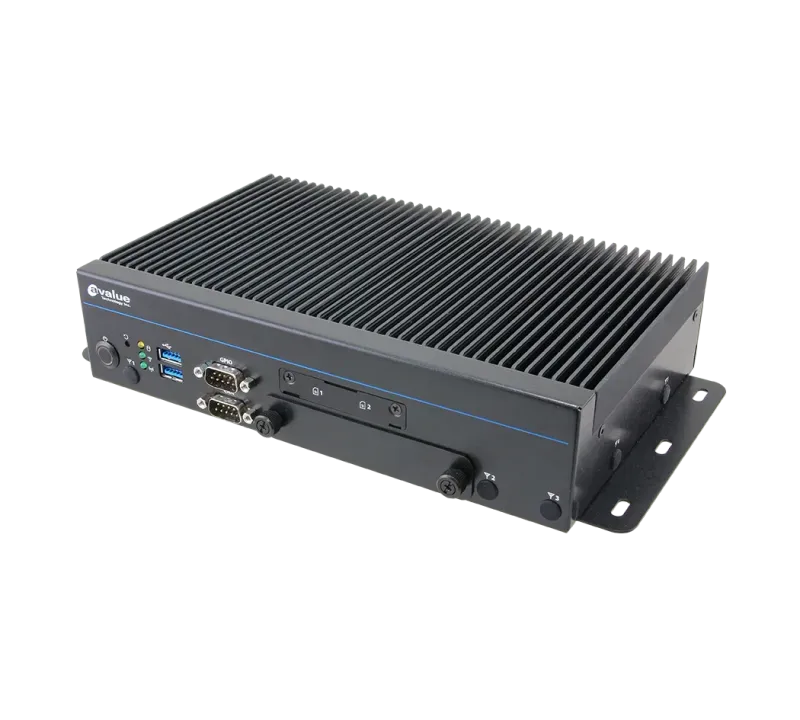
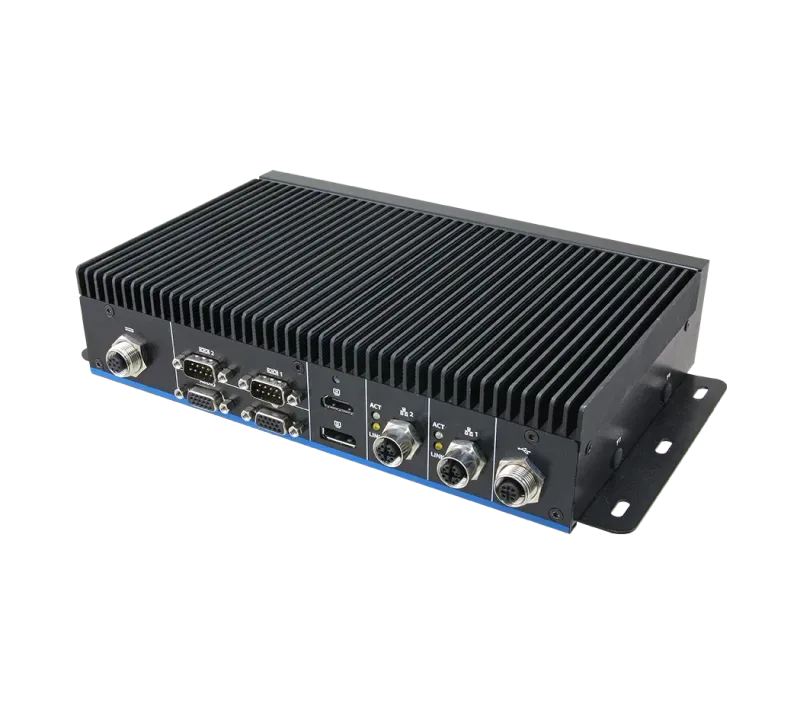
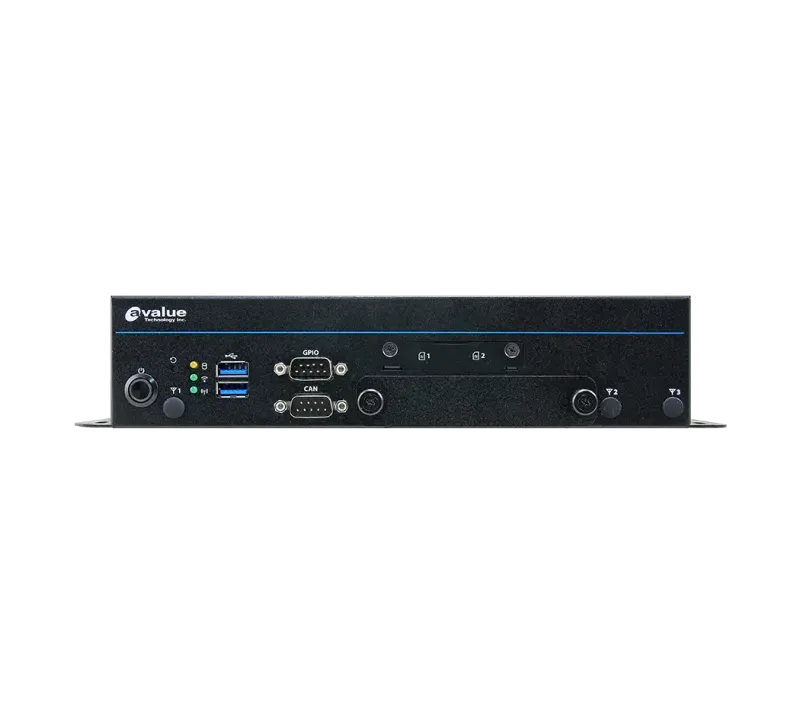
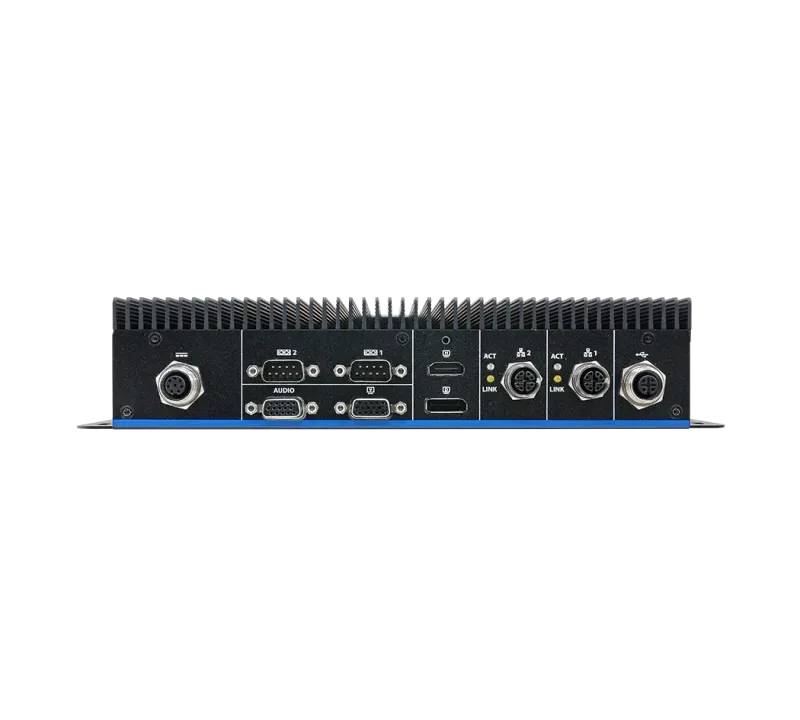
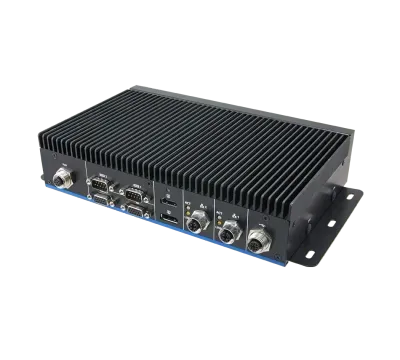
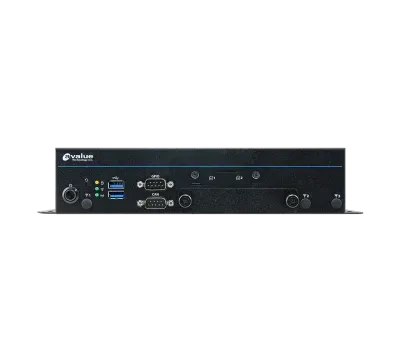
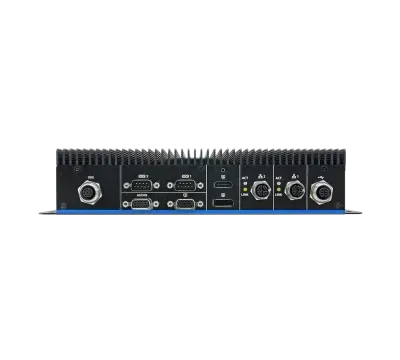
VMS-EHLR vista frontaleVMS-EHLR vista frontaleVMS-EHLR vista frontaleVMS-EHLR vista frontale
VMS-EHLR, Image 1VMS-EHLR, Image 2VMS-EHLR, Image 3VMS-EHLR, Image 4
Scheda tecnica

*Prezzo su richiesta. Ci contatti per un preventivo.

Produttore: Avalue

In evidenza

  • Intel Atom® x6425E Processor
  • Intel® UHD Graphic for 10th Gen Intel® Processor
  • 1-Memory Socket, Max. Up to 32GB DDR4 3200
  • 2-COM Port (RS-232/422/485 by BIOS & Jumper)
  • 2-Storage (Front Access 2.5” & M.2 Key-B SSD)
  • 3-Display (DP 1.4 & HDMI 2.0 & VGA)
  • 3-Expansion (mPCIe & M.2 Key-E/B)
  • 4-M12 (DC-Input, USB 2.0, 2-LAN Port)
  • 8-Bit Programable GPIO with 2.5KV Isolated
  • Default Wall Mount Kit, dTPM 2.0 onboard

Descrizione del prodotto

The Avalue VMS-EHLR is a rugged vehicle-mounted computing system engineered for intelligent transportation and mobile industrial applications.

Designed to operate reliably under vibration, shock, and wide temperature conditions, it provides stable performance for onboard monitoring, fleet management, data acquisition, and control systems.

Its industrial-grade construction and long-term availability make the VMS-EHLR suitable for railways, public transport, logistics vehicles, and smart mobility infrastructures.

Specifiche tecniche

Processore

Intel Atom® x6425E Processor

1.5M Cache, up to 3.00 GHz

Memoria di sistema

1 x 260-Pin SODIMM DDR4 3200MHz up to 32GB

Chipset I/O

AMI uEFI lBIOS 256 Mbit SPI Flash ROM

Watchdog timer

H/W Reset, 1sec. ~ 65535sec.

Monitoraggio dello stato hardware

Horizontal battery socket


Supports wide operating temperature


Supports no RTC battery mode

TPM

TPM 2.0 (Default)

SBC

EBM-EHLR + EBM-EHLR DB-A

M.2

1 x M.2 Key-B 2242/3042/3052 support PCIeIII x1/ USB3.1 Gen.2 and SIM slot1 (external)

1 x M.2 Key-E 2230 for Wi-Fi & BT Module (PCIeIII x 1/ USB2.0 )

mPCIe

1 x mPCIe support PCIeIII x1/ USB2.0 and SIM slot2 (external)

M.2

1 x M.2 key-B 2242 support SATA III (share with expansion slot)

Vano unità da 2,5"

1 x 2.5” drive Bay (SATA III)

USB

2 x USB 3.2 Gen.2 (10Gbp/s)

Pulsante di accensione

Push Button for Power on/off (w/LED)

Pulsante di reset

Push Button for Reset (Hidden)

Indicatore LED

1 x Power LED (Blue)

1 x Storage LED (Yellow)- M.2 B-key SATA/2.5’’SSD Storage

1 x LTE LED (Green)- M.2 B-key PCIe/USB3

1 x Wifi LED (Green)- M.2 E key

CAN bus

1 x 4-Pin CAN Bus H/L in DB-9

Slot SIM

2 x Front Access SIM Slot

I/O digitale

1 x 8-Bit 2.5KV Isolated GPIO in DB-9

Antenna

3 x Antenna Mount

USB

1 x USB 2.0 in M12-A code connector

Porta COM

2 x COM RS232/422/485 (select via BIOS, auto flow control via HW)

Porta LAN

2 x LAN Port in M12-X code connector

Audio

1 x Line-In, Line-Out and Mic-In in DB-15

DP

1 x DP 1.4

HDMI

1 x HDMI 2.0

VGA

1 x VGA

Ingresso AC/DC

M12-A code (4 Poles: V+. V-, GND, IGN)

Antenna

2 x Antenna Mount

Antenna

2 x Antenna Mount

Chipset

u-blox NEO-M9N GNSS LCC module with Untethered Dead Reckoning and onboard sensors

Protocollo

BeiDou, Galileo, GLONASS, GPS / QZSS

Chipset grafico

Intel® UHD Graphics

Risoluzione

DP++ 1.4 : Max. resolution 4096x2304 @ 60Hz

HDMI 2.0 : Max. resolution 4096 x 2304 @ 60Hz

VGA : Max. resolution 1920 x 1080 @ 60Hz

Codec audio

Realtek ALC888S

Chipset LAN

2 x Intel® I210-IT

Specifiche

10/100/1000Base-T

Indicatore LED

4 x LED indicator (LAN for active, speed)

Specifiche di ingresso tensione

Typical 24Vdc ( +9~ 36Vdc ) w/ Isolation

TVS component for surge protection

Reverse current/voltage protection

ACPI

Single power ATX Support S0,S3, S4, S5

ACPI 5.0 Complian

Modalità di alimentazione

AT/ATX (AT default), w/ignition control and power management

OS

Win 10 64bit / Linux

Informazioni sulle certificazioni

CE, FCC Class A, UKCA, EN50155, EN50121, EN45545

Temp. di esercizio

-40°C ~ 70°C (w/SSD) ambient w/ air flow. Follow EN50155, Class OT4

Temp. di stoccaggio

-30°C ~ 70°C (-22°F ~ 158°F)

Umidità di esercizio

40°C @ 95% Relative Humidity, Non-condensing

Dimensioni (L x P x A)

240*150*55 mm

Peso

2.2kg

Test di vibrazione

Operating with SSD : MIL-STD-810G, Method 514.6, Category 4, common carrier US highway truck vibration exposure

Test di urto

Operating with SSD: MIL-STD-810H, Method 516.8, Procedure I, functional shock=20G

Grado di protezione IP

IP50

Kit di montaggio

Wall Mount Kit (standard)

Informazioni per l'ordine

VMS-EHLR-A1-1R

Intel® Elkhart Lake Atom® x6425E Processor Rugged Fanless Railway System

Che cos'è VMS-EHLR?

The VMS-EHLR is a sistema di elaborazione manufactured by Avalue, designed specifically for transportation-system applications. It features processore of Intel Atom® x6425E Processor, 1.5M Cache, up to 3.00 GHz, rete of 2 x LAN Port in M12-X code connector and sistema operativo of Win 10 64bit / Linux. The Avalue VMS-EHLR is a rugged vehicle-mounted computing system engineered for intelligent transportation and mobile industrial applications. Designed to operate reliably under vibration, shock, and wide temperature conditions, it provides stable performance for onboard monitoring, fleet management, data acquisition, and control systems. Its industrial-grade construction and long-term availability make the VMS-EHLR suitable for railways, public transport, logistics vehicles, and smart mobility infrastructures.

Caratteristiche e vantaggi principali

  • Intel Atom® x6425E Processor
  • Intel® UHD Graphic for 10th Gen Intel® Processor
  • 1-Memory Socket, Max. Up to 32GB DDR4 3200
  • 2-COM Port (RS-232/422/485 by BIOS & Jumper)
  • 2-Storage (Front Access 2.5” & M.2 Key-B SSD)
  • 3-Display (DP 1.4 & HDMI 2.0 & VGA)
  • 3-Expansion (mPCIe & M.2 Key-E/B)
  • 4-M12 (DC-Input, USB 2.0, 2-LAN Port)
  • 8-Bit Programable GPIO with 2.5KV Isolated
  • Default Wall Mount Kit, dTPM 2.0 onboard

Applicazioni e casi d'uso

VMS-EHLR è ideale per diverse applicazioni di automazione industriale:

  • DC-powered industrial installations and mobile applications
  • Legacy equipment integration and serial communication
  • High-performance computing and data processing tasks
  • Networked industrial systems and data communication
  • Peripheral device connectivity and data transfer
  • Memory-intensive applications and multitasking
  • Data logging and storage-intensive operations
  • Visual monitoring and data display systems

Domande frequenti