
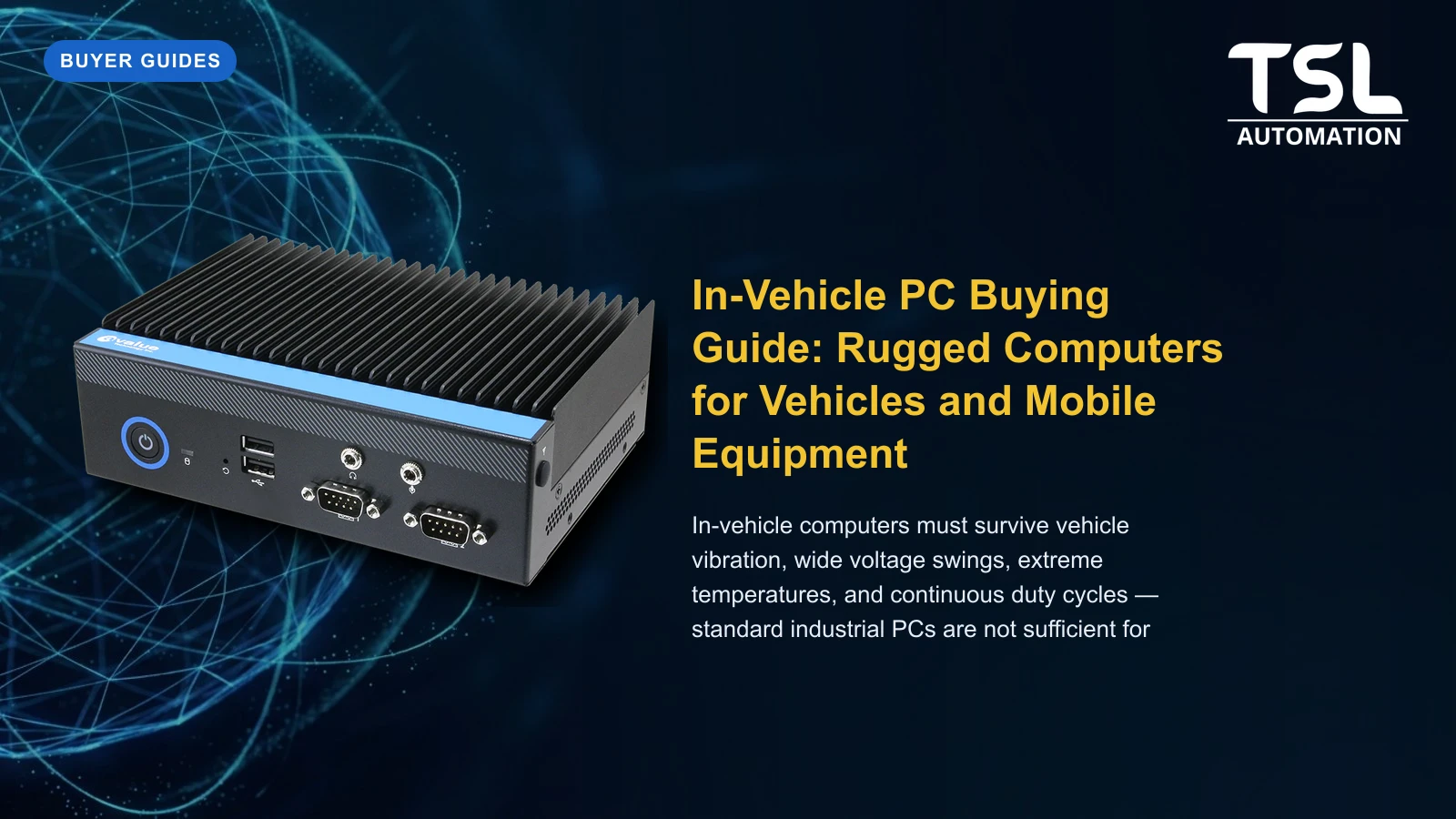
Komputery pokładowe, poradnik zakupowy: wzmocnione komputery do pojazdów
Spis treści
Key Requirements for In-Vehicle Computers
Wide Voltage Input
Vehicle electrical systems are noisy and variable. A 12V vehicle battery actually swings from 9V (cranking) to 16V (alternator charging). Heavy diesel vehicles use 24V systems that swing from 18V to 32V. In-vehicle PCs must accept these voltage ranges without damage. Avalue in-vehicle platforms typically accept 9 do 36V DC or 16 do 160V DC input.
Ignition Sensing and Power Management
In-vehicle PCs should start automatically when the ignition is switched on and perform a controlled shutdown when it is switched off, without data corruption. Ignition input sensing and configurable power-on/power-off delay timers are essential features for vehicle-mounted computers.
Vibration and Shock
Vehicle vibration, especially on construction sites, off-road terrain, or railway tracks, is far more severe than factory floor vibration. In-vehicle PCs must be tested to MIL-STD-810G Method 514.6 (vibration) and Method 516.6 (shock) or equivalent standards. Solid-state storage is mandatory.
Operating Temperature
Vehicle cabins can reach 80°C+ in direct sun before air conditioning is activated. In-vehicle PCs must operate through cold starts at −20°C to −40°C and survive cabin temperatures during summer parking. Wide temperature ratings of −20°C to 70°C are the minimum; −40°C to 85°C for extreme climates.
Typical In-Vehicle Applications
- Fleet management (GPS, telemetry, video)
- Railway passenger information systems
- Mining and construction equipment data logging
- Emergency vehicle dispatch computers
- Port and warehouse AGV controllers
Często zadawane pytania
TSL Automation Solutions
Dyrektor marketingu, TSL Automation Solutions
Sanjana pisze o trendach w automatyce przemysłowej, premierach produktów i nowych technologiach dla TSL Automation Solutions, dystrybutora paneli HMI, paneli PC i systemów wbudowanych z siedzibą w Mumbaju, obsługującego producentów w Indiach i na całym świecie.
Potrzebna pomoc w wyborze właściwego produktu?
Nasz zespół w Mumbaju doradzi odpowiedni panel HMI, panel PC lub system wbudowany do Państwa zastosowania.
Kontakt z TSL AutomationPowiązane artykuły
Jak wybrać serwer brzegowy AI: poradnik zakupowy dla AI & wizji maszynowej
4 sie 2026
Panel PC z Androidem czy z Windows do kiosków samoobsługowych i QSR?
20 maj 2026
COM Express, SMARC czy Qseven? Który standard Computer-on-Module (COM) wybrać
20 maj 2026