
Jak wybrać monitor przemysłowy: poradnik zakupowy
Spis treści
Step 1: Choose Screen Size and Aspect Ratio
Industrial monitors range from 7" to 55". Choose based on viewing distance and information density:
- 7", 10", machine-mounted, close viewing
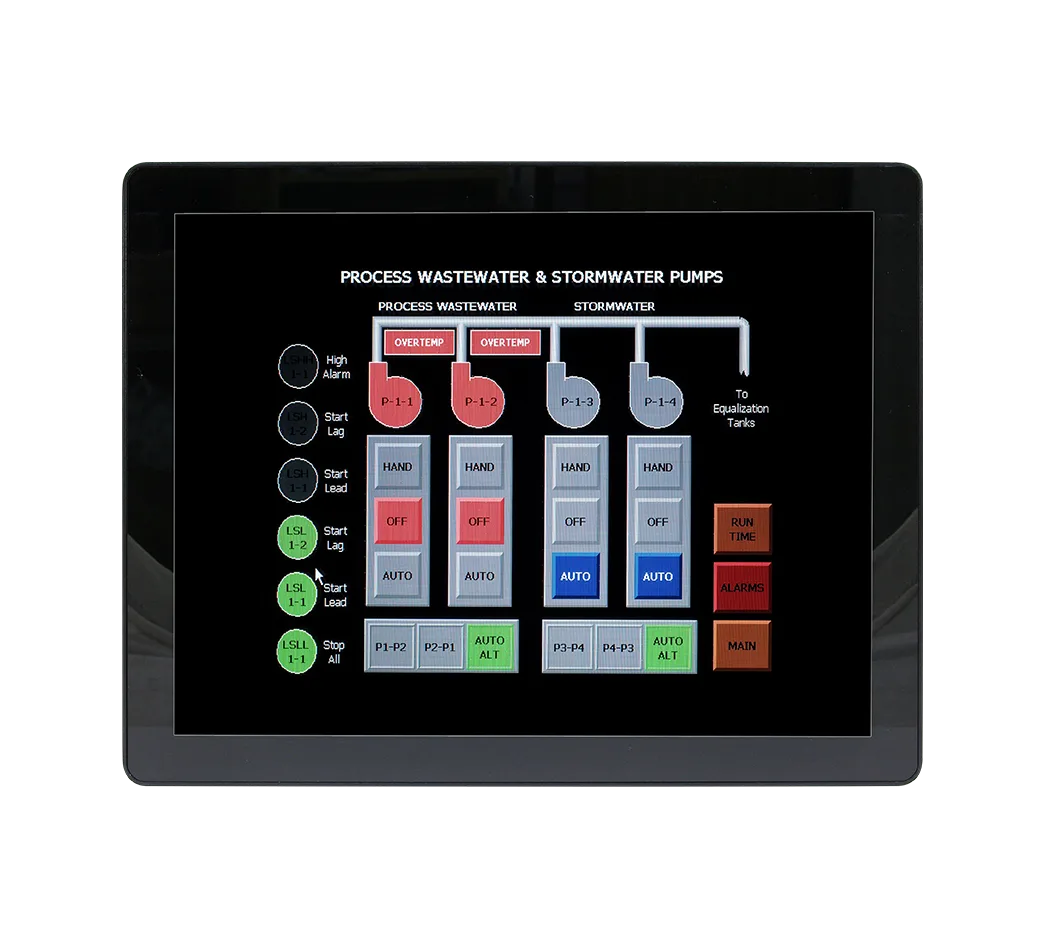
- 12", 15", standard SCADA workstation
- 17", 21", control room, multi-parameter display
- 24", 32", supervisor overview screens and video wall tiles
Step 2: Brightness for Your Environment
- 250 do 350 nits, standard indoor, ambient-lit environment
- 500 do 700 nits, bright factory floor with overhead lighting
- 1000+ nits, semi-outdoor, near windows, direct sunlight exposure
Step 3: Touch Technology
- Resistive touch, works with gloves; single-touch only; lower cost; suitable for simple HMI use
- Capacitive touch, multi-touch, fast response; requires bare fingers or conductive gloves
- PCAP (Projected Capacitive), most responsive; water-rejection algorithms; best choice for new installations
Step 4: IP Rating and Mounting
For panel-mount or open-frame monitors, confirm the front-panel IP rating. IP65 is the minimum for most factory environments. Open-frame monitors (no bezel or case) are installed inside custom enclosures and can have full IP65/IP67 front seals.
Step 5: Interface
Check that the display interface (HDMI, DisplayPort, VGA, DVI, or LVDS) matches your computer's outputs. For embedded systems, LVDS or eDP connections are common. For external monitors, HDMI or DisplayPort is standard.
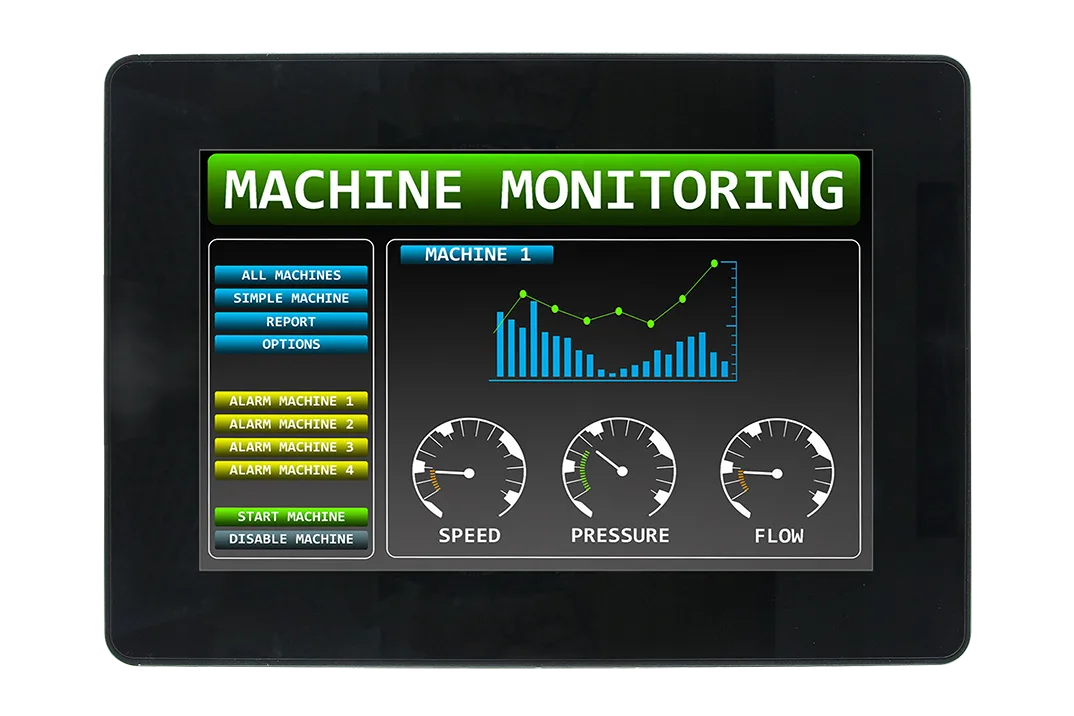
TSL Automation supplies Avalue open-frame and panel-mount industrial monitors in sizes from 7" to 21.5", contact us to find the right display for your project.
Często zadawane pytania
TSL Automation Solutions
Dyrektor marketingu, TSL Automation Solutions
Sanjana pisze o trendach w automatyce przemysłowej, premierach produktów i nowych technologiach dla TSL Automation Solutions, dystrybutora paneli HMI, paneli PC i systemów wbudowanych z siedzibą w Mumbaju, obsługującego producentów w Indiach i na całym świecie.
Potrzebna pomoc w wyborze właściwego produktu?
Nasz zespół w Mumbaju doradzi odpowiedni panel HMI, panel PC lub system wbudowany do Państwa zastosowania.
Kontakt z TSL AutomationPowiązane produkty
Powiązane artykuły
Jak wybrać serwer brzegowy AI: poradnik zakupowy dla AI & wizji maszynowej
4 sie 2026
Panel PC z Androidem czy z Windows do kiosków samoobsługowych i QSR?
20 maj 2026
COM Express, SMARC czy Qseven? Który standard Computer-on-Module (COM) wybrać
20 maj 2026