
Fanless vs Fan-Cooled Industrial PC: A Detailed Comparison
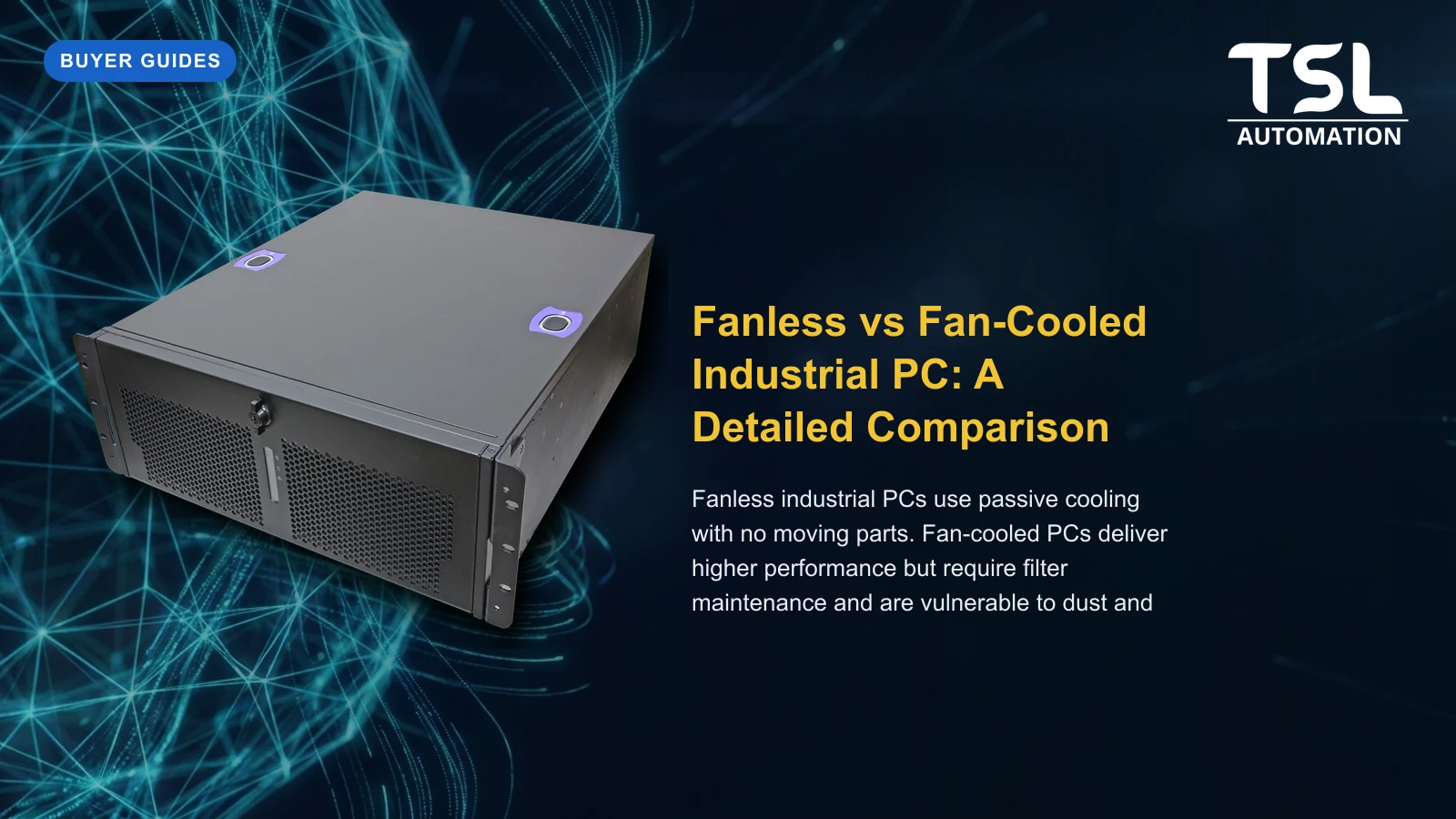
Table of Contents
Fanless Industrial PC: How It Works
A fanless industrial PC uses a large aluminium heatsink chassis to conduct heat away from the processor. The entire outer surface of the unit acts as a radiator. There are no moving parts, no air vents, and no dust ingress paths. This makes fanless PCs the default choice for most industrial environments.
Fan-Cooled Industrial PC: When It Makes Sense
Some applications require very high-performance processors (Core i7/i9 at 65–125W TDP) that generate more heat than passive cooling can handle. In these cases, a fan-cooled industrial PC or workstation is used — but with industrial-grade fans designed for dusty environments, filterable intake vents, and longer bearing life (50,000+ hours).
Side-by-Side Comparison
| Feature | Fanless | Fan-Cooled |
|---|---|---|
| Moving parts | None | Fan(s) |
| Dust resistance | Fully sealed | Requires filter maintenance |
| Vibration resistance | Excellent | Fan bearings vulnerable to vibration |
| Noise | Silent | Audible fan noise |
| Maintenance | None | Filter cleaning every 3–6 months |
| Max processor TDP | Typically 15–65W | 65–125W+ |
| Best for | Factory floor, harsh environments | Server rooms, high-performance workstations |
Recommendation for Indian Manufacturing
For 95% of Indian manufacturing applications — SCADA workstations, HMI systems, data loggers, and IoT gateways — a fanless industrial PC is the correct choice. Indian factories typically have high ambient dust, humidity, and temperature, all of which reduce fan-cooled PC reliability. Only choose a fan-cooled design when your application genuinely requires a processor TDP above 65W.
Frequently Asked Questions
TSL Automation Solutions
Head of Marketing, TSL Automation Solutions
Sanjana covers industrial automation trends, product launches, and technology insights for TSL Automation Solutions, a Mumbai-based distributor of HMI, Panel PC, and embedded computing systems serving manufacturers across India and globally.
Need help choosing the right product?
Our team in Mumbai can recommend the right HMI, Panel PC, or embedded system for your application.
Contact TSL AutomationRelated Products
Related Articles
How to Choose an Edge AI Server: A Buyer’s Guide for On-Site AI & Machine Vision
Aug 4, 2026
Android vs Windows Panel PC for Self-Service Kiosks and QSR: Which Should You Pick?
May 20, 2026
COM Express vs SMARC vs Qseven: Which Computer-on-Module Standard Should You Pick?
May 20, 2026