
How to Choose an Edge AI Server: A Buyer’s Guide for On-Site AI & Machine Vision
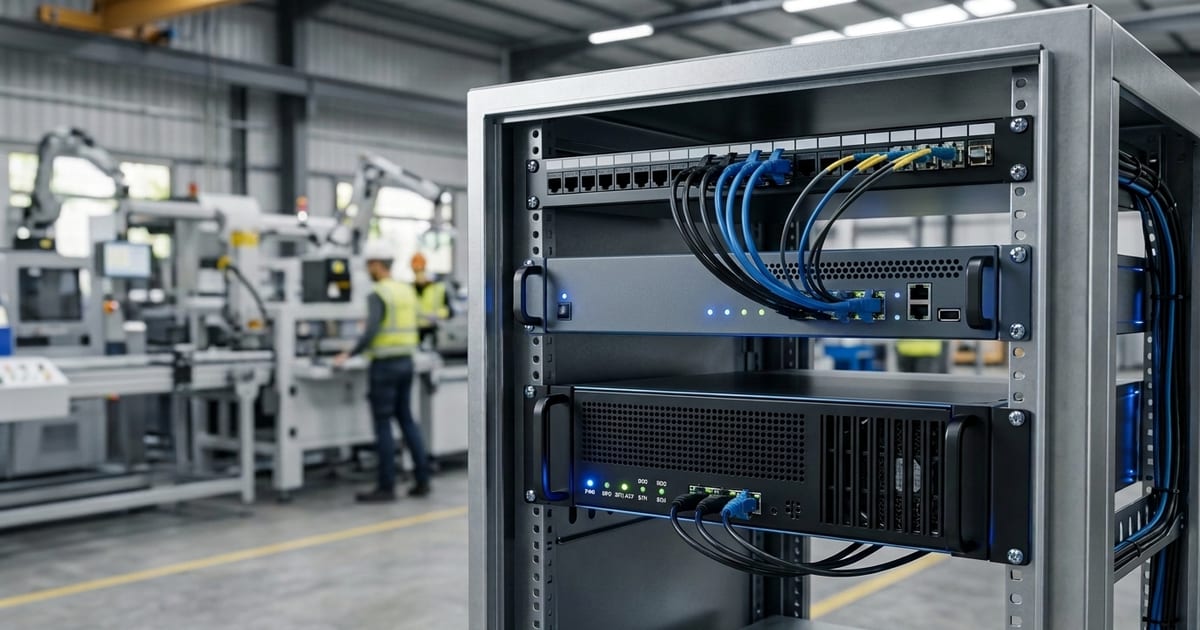
Table of Contents
An edge AI server is a rugged, server-grade computer that runs artificial intelligence and analytics workloads on-site, at the machine or production line, instead of in a distant cloud data centre. To choose the right one you match four things to your application: the AI workload (does it need a GPU), the compute (cores, memory, expansion), the form factor (fanless or rackmount), and the operating environment. This guide walks through each decision the way our engineers do when they size a system.
If you already know you need one, you can jump straight to our range of industrial edge servers. Otherwise, read on to choose the right specification.
What is an edge AI server?
An edge AI server brings data-centre capability to the edge. Compared with a basic industrial PC it adds more processor cores, error-correcting (ECC) memory, one or more GPUs, PCIe expansion, and faster networking, packaged in a form built for continuous, unattended duty. It is the compute layer behind real-time machine vision, on-premise AI models, and multi-stream analytics. For the wider picture of on-site processing, see our industrial edge computing overview.
Edge AI server vs cloud vs industrial box PC
These three often get confused. The simplest way to decide is by latency, workload, and control:
| Industrial Box PC | Edge AI Server | Cloud Server | |
|---|---|---|---|
| Best for | Machine control, data collection | Real-time AI, multi-camera vision, on-site analytics | Long-term storage, fleet dashboards, model training |
| Latency | Low | Lowest (at the source) | High (network round-trip) |
| GPU / heavy AI | Limited | Yes (single or multi-GPU) | Yes, but remote |
| Works offline | Yes | Yes | No |
| Data stays on-site | Yes | Yes | No |
Most real deployments combine an edge AI server for real-time work with the cloud for storage and training. The edge handles the milliseconds; the cloud handles the months.
How to choose: the specifications that matter
1. GPU or NPU: does your workload need one?
Data aggregation, historian, and light analytics run fine on a CPU-only server. Real-time computer vision, defect detection, multi-camera inspection, and on-premise AI models need a GPU or NPU. If your application involves cameras or deep-learning inference, plan for accelerated compute from the start rather than retrofitting later.
2. CPU cores and ECC memory
Match core count to how many streams or tasks run in parallel. For multi-stream vision or virtualisation, a higher core count and ECC memory keep the system stable under sustained load. ECC memory matters for servers running unattended for months, where silent data errors are unacceptable.
3. Form factor: fanless or rackmount?
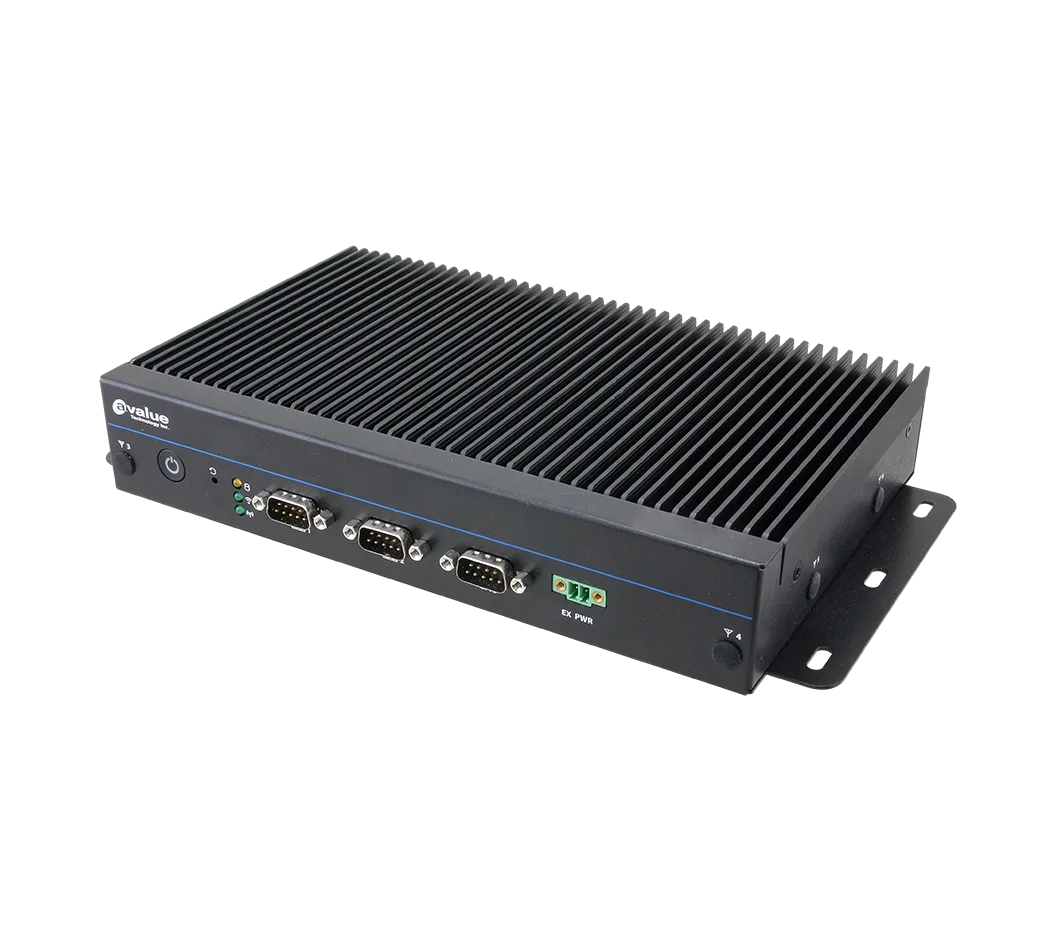
Fanless edge servers use a sealed heatsink chassis with no moving parts, ideal for dusty, hot, vibration-heavy locations right next to the line. Rackmount and tower units suit control rooms and edge cabinets where you need more expansion, drives, or multiple GPUs. Choose fanless for the harshest spots and rackmount where you have a protected enclosure.
4. Networking and I/O
Camera-heavy vision systems are bandwidth-hungry. Count your camera streams, then confirm the server has enough GigE / 2.5GbE / 10GbE ports and PoE budget, plus the serial and digital I/O needed to talk to PLCs and machines. Under-specifying networking is the most common reason a vision deployment underperforms.
5. Storage and expansion
Local AI and analytics generate data quickly. Specify NVMe storage for throughput, RAID where uptime matters, and leave PCIe slots free for future GPUs or capture cards. Expansion headroom is cheap to buy now and expensive to add later.
6. Operating environment
Confirm the temperature range, vibration and shock ratings, and power input for where the server will actually sit. A standard 0 to 50 degrees C unit will not survive next to a furnace or in an unconditioned outdoor cabinet, where a wide-temperature, fanless design is required.
7. Lifecycle and local support
Industrial deployments run for years. Choose hardware with a multi-year lifecycle so you can source identical units for spares and expansion, and buy from a distributor who supports you locally on sizing, warranty, and RMA. This is where an authorised channel matters more than a marginally cheaper grey-market unit.
Match the server to your use case
- Multi-camera machine vision: a GPU edge AI server running inference next to the cameras.
- Heavier or growing AI workloads: a GPU-expandable modular edge server with PCIe headroom.
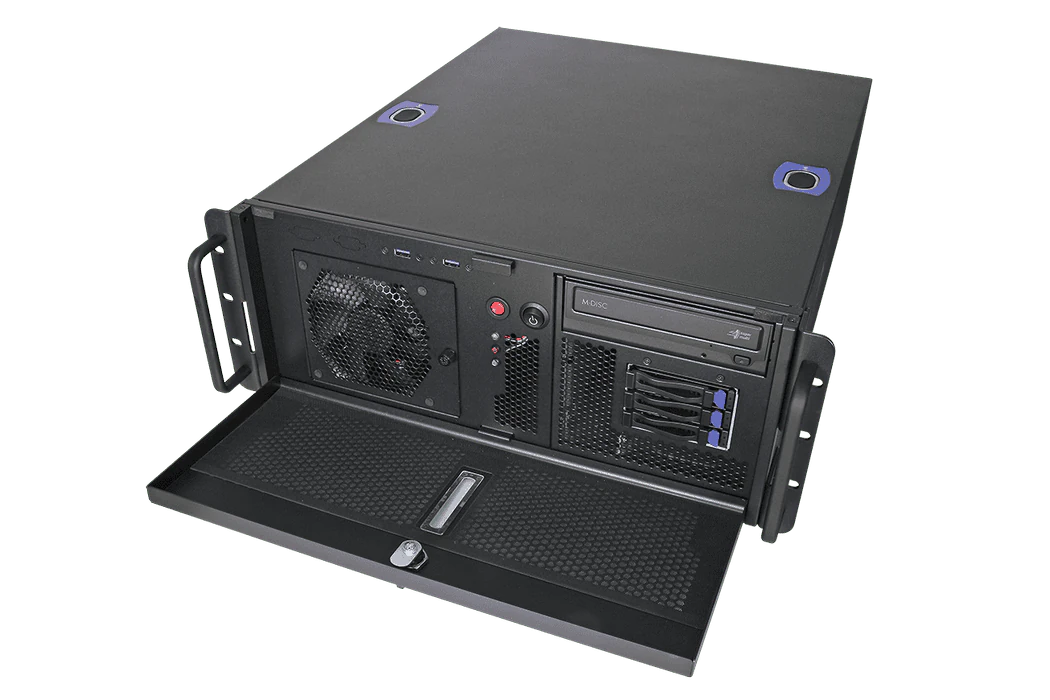
- On-premise AI, analytics, and virtualisation: a rackmount server workstation in the cabinet.
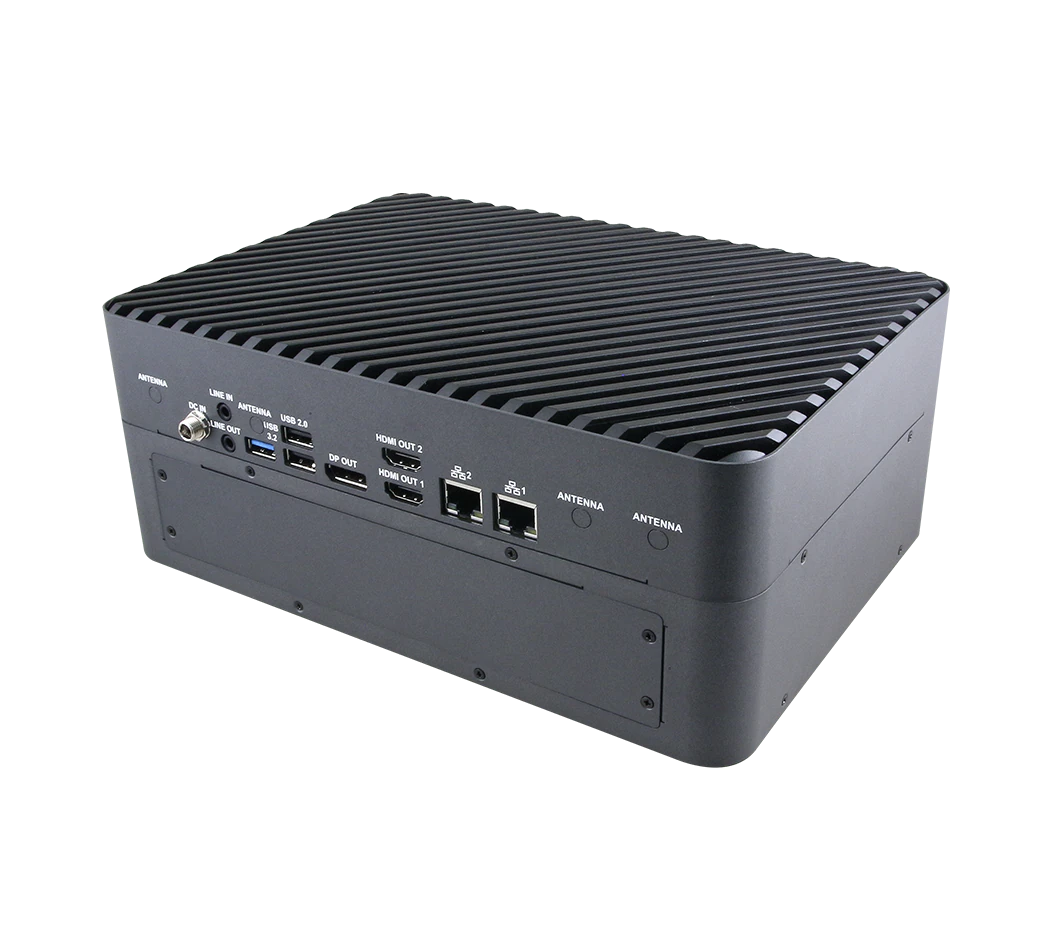
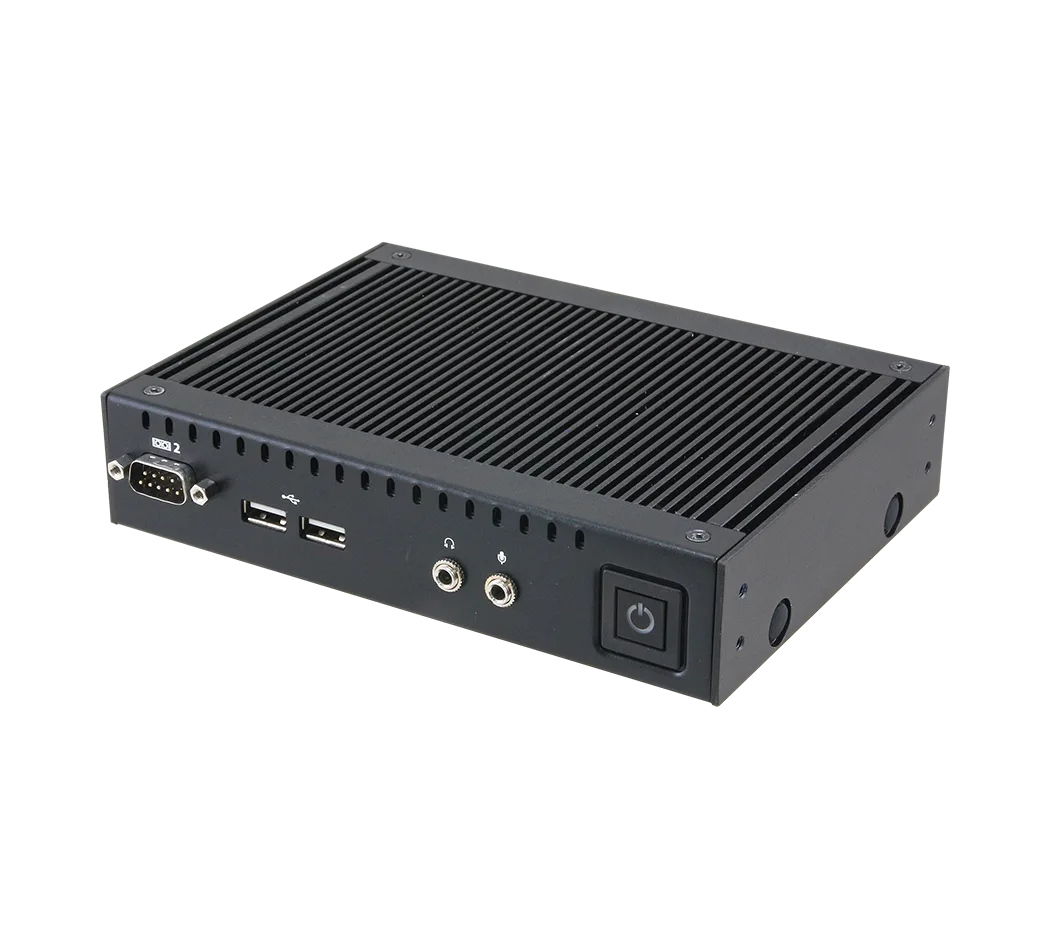
- Rugged, unattended sites: a compact fanless edge server with no moving parts.
How TSL sizes your edge server
There is no single right answer: the correct edge AI server depends on your camera count, model, throughput target, and environment. TSL Automation Solutions is an authorised India distributor of Avalue Technology, and our team sizes the CPU, GPU, memory, and I/O to your specific application, then quotes and supplies it pan-India with long-lifecycle support. Tell us your workload and we will recommend the right configuration. Browse the full edge server range or request a quote to get started.
Frequently Asked Questions
Sanjana Lamba
Head of Marketing, TSL Automation Solutions
Sanjana covers industrial automation trends, product launches, and technology insights for TSL Automation Solutions, a Mumbai-based distributor of HMI, Panel PC, and embedded computing systems serving manufacturers across India and globally.
Need help choosing the right product?
Our team in Mumbai can recommend the right HMI, Panel PC, or embedded system for your application.
Contact TSL AutomationRelated Products
Related Articles
Android vs Windows Panel PC for Self-Service Kiosks and QSR: Which Should You Pick?
May 20, 2026
COM Express vs SMARC vs Qseven: Which Computer-on-Module Standard Should You Pick?
May 20, 2026
How to Choose a Control PC for AMR and AGV Autonomous Mobile Robots
May 20, 2026