
How to Choose a Control PC for AMR and AGV Autonomous Mobile Robots
Table of Contents
What an AMR/AGV control PC actually has to do
An autonomous mobile robot's onboard computer is not a desk PC. It runs SLAM and perception (LiDAR + cameras + IMU fusion), executes the motion planner against a deterministic loop, talks to motor drivers over EtherCAT / CANopen / CAN bus, exchanges fleet messages over Wi-Fi or 5G, and sometimes runs vision-based inspection or pick verification on the same box. It has to do all of that on a battery rail, in a vibrating chassis, with a sealed thermal design, for years.
The non-negotiables
- Wide voltage input — typically 9–36 VDC to ride out battery discharge, regenerative braking and bus dips
- Vibration- and shock-tolerant build — onboard CPU (not socketed), no spinning disk, soldered RAM where possible
- Fanless cooling — sealed against dust, no fan to fail in a warehouse environment
- Wide operating temperature — at least -20°C to +60°C; -40°C to +80°C for cold-store
- Deterministic I/O — CAN bus, RS-485, isolated GPIO, EtherCAT-capable Ethernet
- Multiple Ethernet — segregated networks for control, vision and fleet
- Wireless — Wi-Fi 6 plus 5G or LTE; dust-protected antenna mounts
- Edge AI compute if perception runs onboard — discrete NPU/GPU or Jetson-class module
- TPM 2.0 for fleet identity and secure update
- Long-term availability — 5–7 year lifecycle so production fleets aren't redesigned mid-life
How to map robot class to PC tier
Light-duty indoor AMR / hospital tug
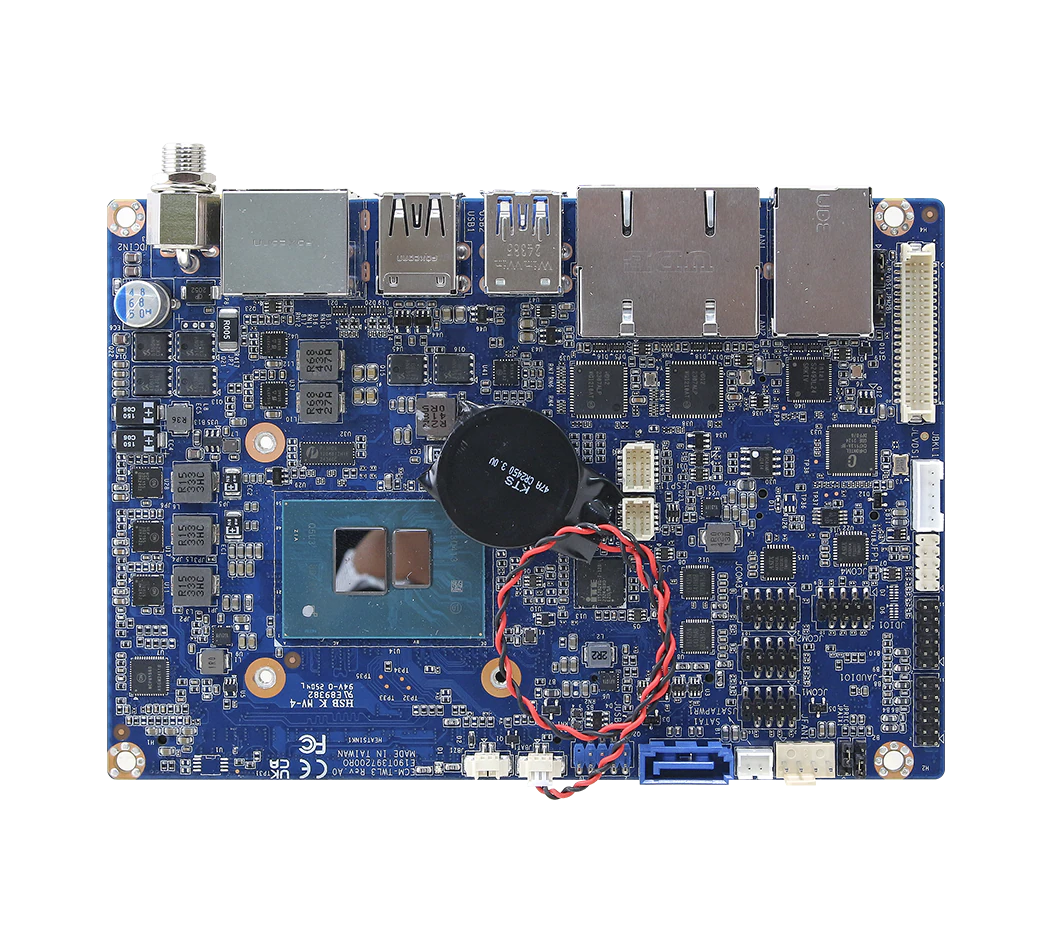
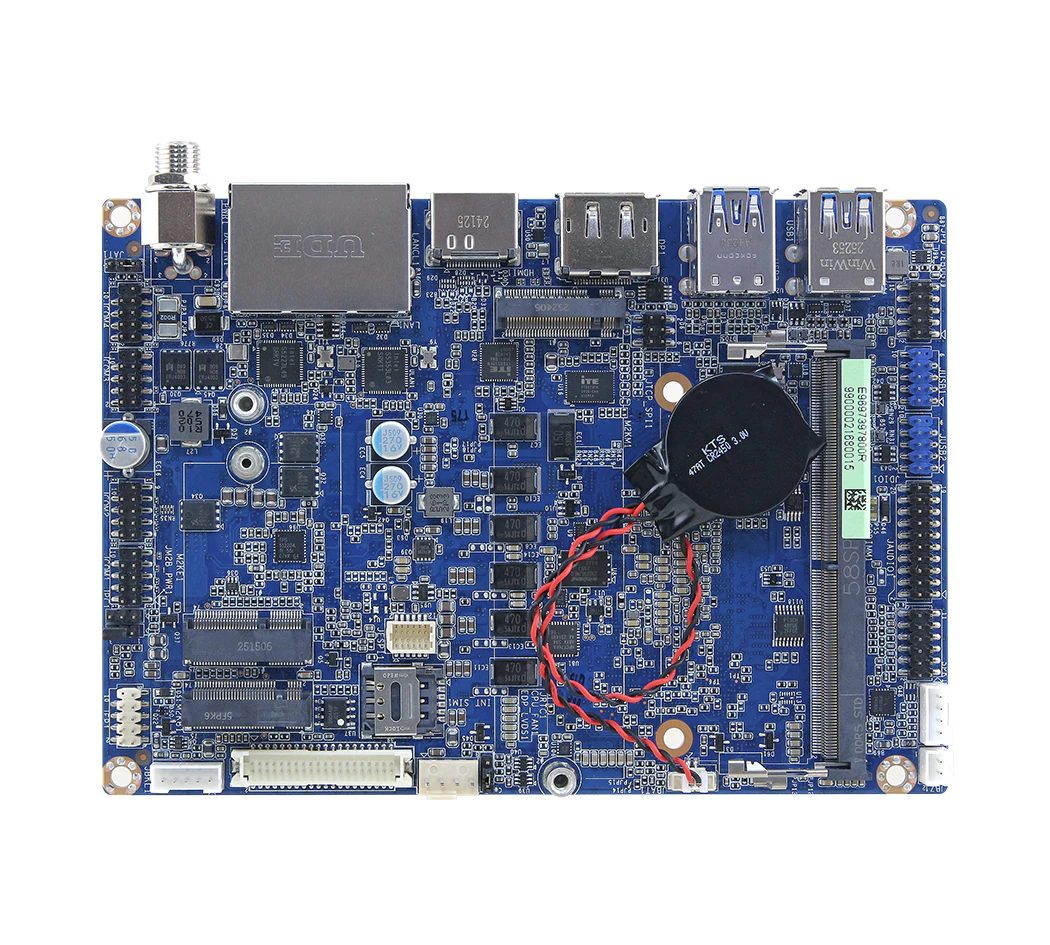
An ARM SBC or low-power x86 is enough — ROS 2 navigation stack, modest perception, battery-rail wide-voltage input. The ECM-ASL3 3.5" SBC (Intel Alder Lake-N / Amston Lake, -40°C to +80°C, 9–36 VDC, TPM 2.0, triple M.2, triple Ethernet, three displays) is squarely sized for this — see our ECM-ASL3 coverage. ARM alternatives include the ARM-based SBC range.
Mid-duty AMR with onboard vision
A 3.5" or Thin Mini-ITX SBC with edge AI compute and PCIe expansion for an AI accelerator. The ECM-PTL (Intel Core Ultra Series 3 with integrated NPU, DDR5-7200, PCIe Gen5) covers AI inference on-board without a discrete GPU — see our ECM-PTL coverage.
Heavy AGV / autonomous forklift with multi-camera vision
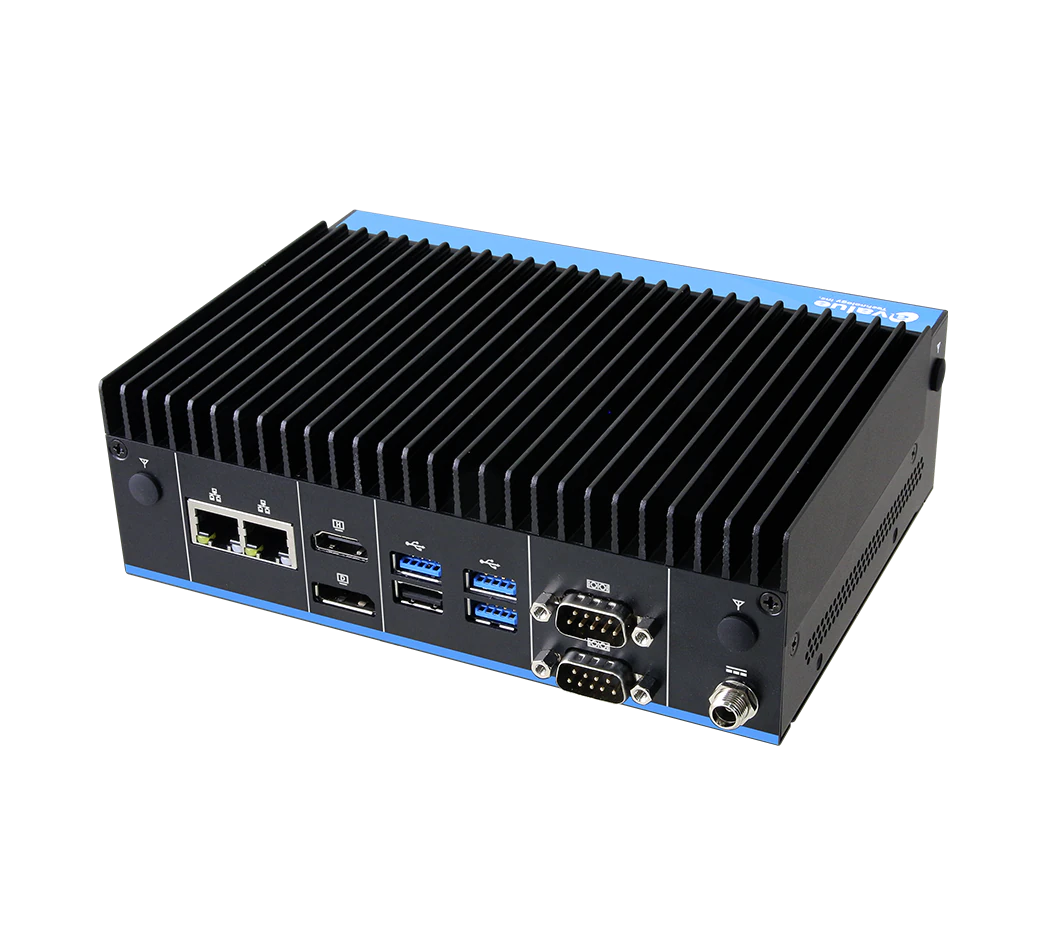
A fanless box PC with a discrete GPU (Jetson-class or RTX Ada). See how to size the GPU for the math. Avalue's EPC-TWL Twin Lake fanless box covers the wide-voltage, fanless side of this class.
Selection checklist
- Voltage rail (9–24, 9–36, 12–24?) — match the robot's battery and bus
- Operating temperature including cold-store edge cases
- Vibration / shock specification — list the actual standards (IEC 60068-2-6/-2-27)
- Deterministic I/O — count CAN, RS-485, isolated GPIO needs
- Number of Ethernet segments and which are EtherCAT-capable
- Wireless plan — Wi-Fi 6 + 5G/LTE on board or via M.2 add-in
- Perception compute — NPU on-SoC enough, or discrete GPU needed?
- Mechanical envelope — what physically fits in the chassis
- Lifecycle — 5+ years for fleet maintainability
Where TSL Automation fits
TSL Automation supplies Avalue SBCs, embedded systems and edge AI platforms worldwide. Contact our team with your robot class, voltage rail, I/O list and perception model and we'll shortlist the right control PC.
Frequently Asked Questions
TSL Automation Solutions
Head of Marketing, TSL Automation Solutions
Sanjana covers industrial automation trends, product launches, and technology insights for TSL Automation Solutions, a Mumbai-based distributor of HMI, Panel PC, and embedded computing systems serving manufacturers across India and globally.
Need help choosing the right product?
Our team in Mumbai can recommend the right HMI, Panel PC, or embedded system for your application.
Contact TSL AutomationRelated Products
Related Articles
How to Choose an Edge AI Server: A Buyer’s Guide for On-Site AI & Machine Vision
Aug 4, 2026
Android vs Windows Panel PC for Self-Service Kiosks and QSR: Which Should You Pick?
May 20, 2026
COM Express vs SMARC vs Qseven: Which Computer-on-Module Standard Should You Pick?
May 20, 2026