
Medical Cart Buyer Guide: Height, Battery Runtime and Ergonomics for Mobile Clinical Workstations
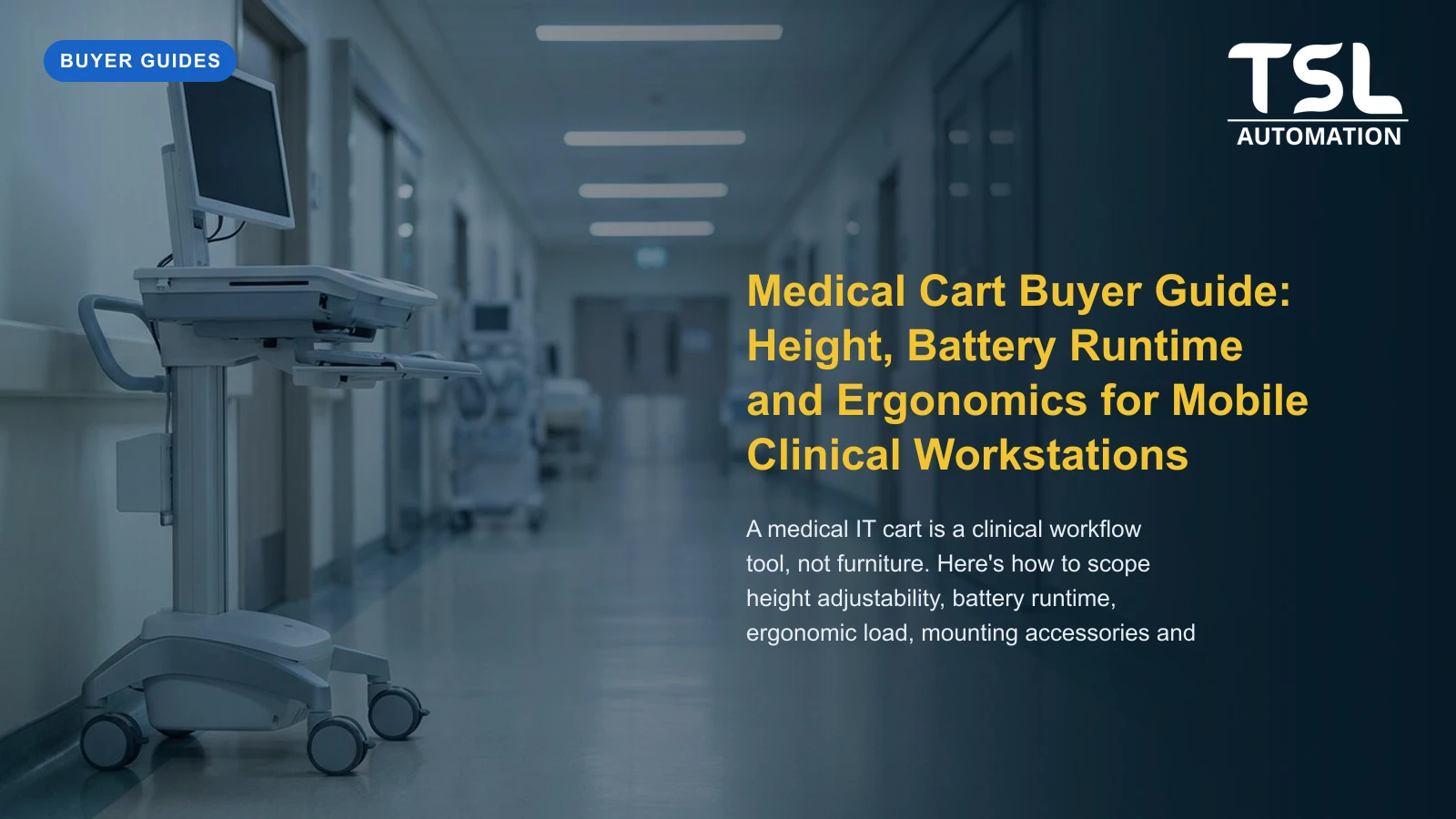
Table of Contents
The cart is part of the workflow, not the periphery
A medical IT cart shows up on every nursing round and at every bedside. Cart choice quietly decides how fast clinicians can chart, how often the device gets parked for charging, and how many ergonomic injuries the unit will accumulate over its life. Treating it as "the thing the laptop sits on" is the most expensive mistake hospitals make.
The seven specs that matter
1. Height — fixed or adjustable?
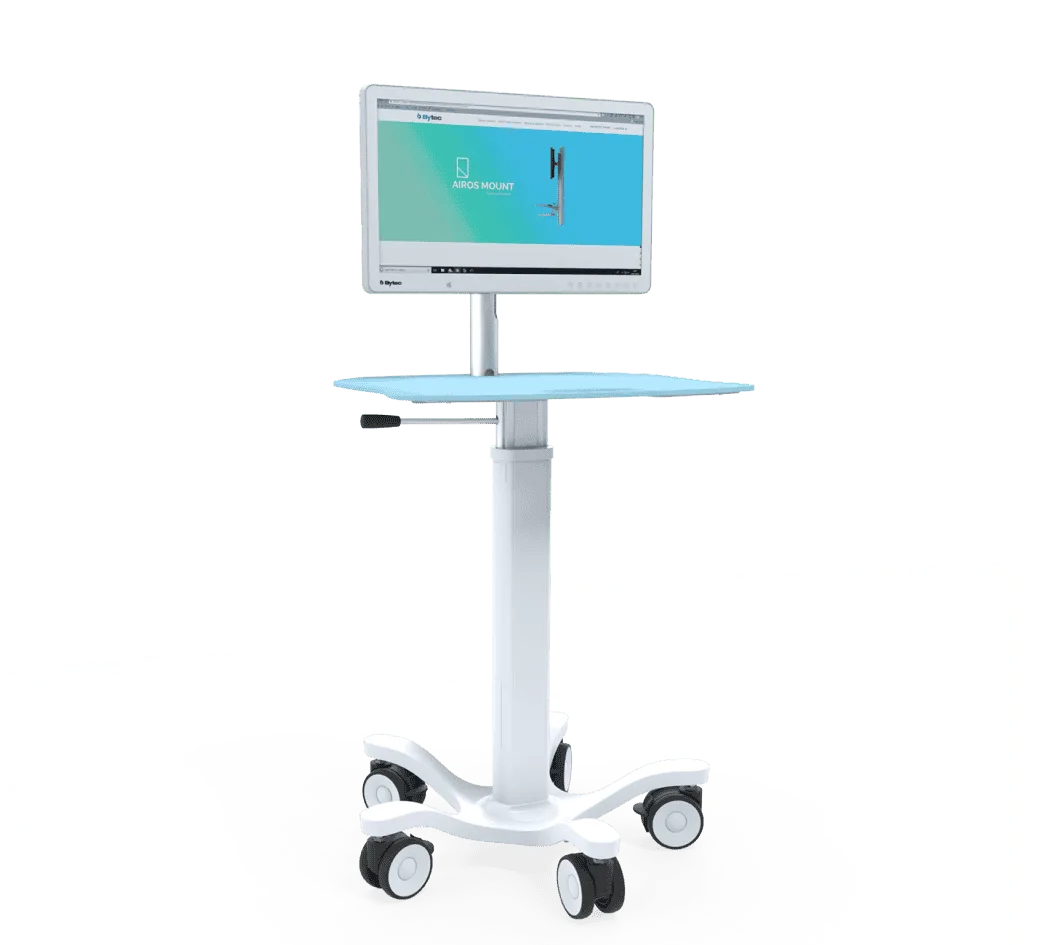
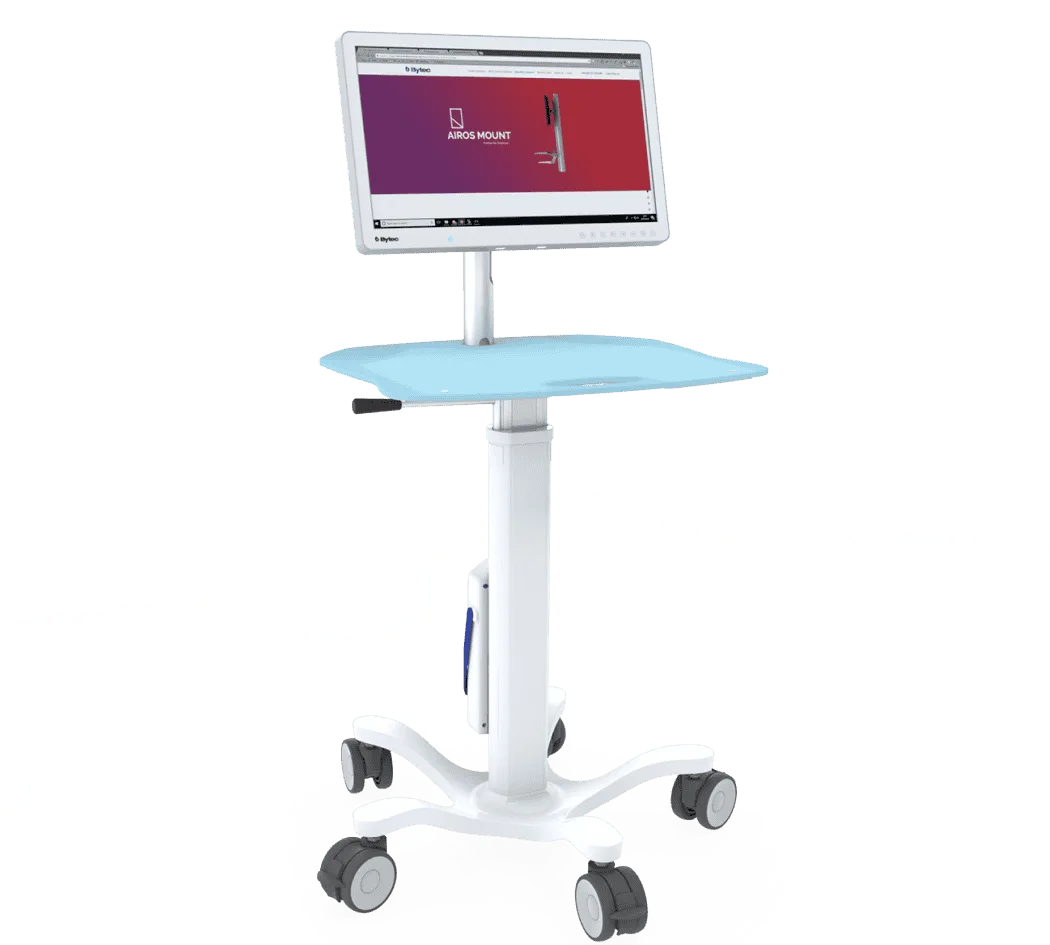
Fixed-height carts are simpler and cheaper, but a single height never fits both a 1.55 m and a 1.90 m clinician. Height-adjustable carts (typical adjustment range ~300 mm) eliminate the daily ergonomic compromise. Avalue's RCC-MITCART ships in both fixed-height (995 mm standard) and height-adjustable (865–1165 mm) variants.
2. Footprint and base
5-castor bases (typically ~675 mm diameter) give better stability for taller stacks and battery housings; 4-castor square bases (~561 × 557 mm) are easier in tight bays. All castors should be braked.
3. Battery runtime and hot-swap
For full shifts without parking, look for hot-swap battery support so the cart stays live across battery changes. For shorter rounds, a single high-capacity battery may be enough. Specify required runtime under your typical compute load, not the marketing peak.
4. Carrying load and mounting
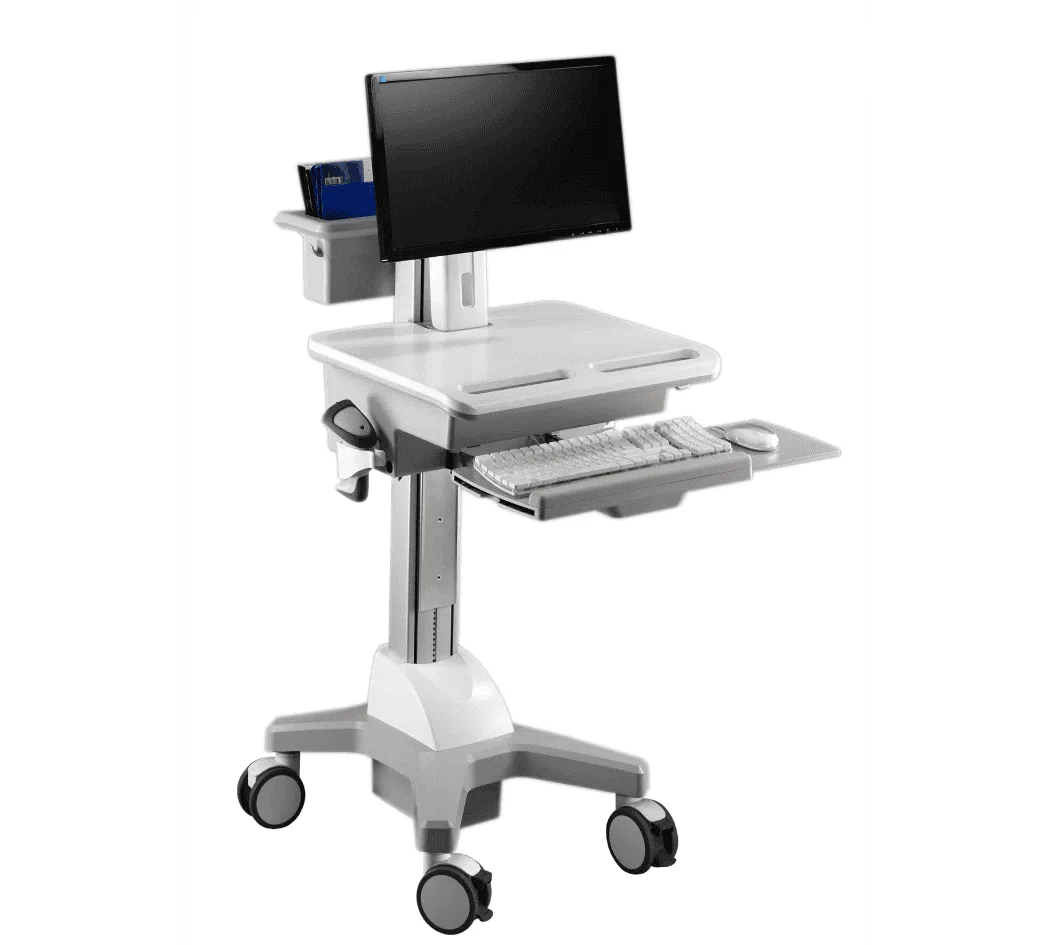
Check the maximum carrying load against everything the cart will carry: an all-in-one panel PC, a barcode scanner, a label printer, peripheral drawers, an IV pole. Avalue's MITCart family is rated up to 18 kg (height-dependent), with accessory rails for handle, basket, Medi-Rail, cable hook, drip pole, PSU adapter holder and keyboard tray.
5. Ergonomics
Look for: cable management routes, low push force, smooth-rolling castors, an angled keyboard tray, and a monitor mount that adjusts independently of the work surface.
6. Infection control
Wipe-down surfaces, antimicrobial coatings on high-contact areas, no fabric, no recessed seams that trap fluids. The cart should be cleanable with the same disinfectant SOP as the rest of the room.
7. Compliance
For sale in regulated regions: CE and UKCA marking. For carts used in patient-area electrical systems: ensure the on-board PC and PSU carry IEC 60601-1 certification (see our IEC 60601-1 buyer guide).
Match the cart to the use case
- EMR / nurse documentation — height-adjustable, mid-size, monitor + keyboard + barcode
- Telemedicine — height-adjustable, camera mount, audio peripherals, hot-swap battery
- Medication administration — locked drawers, label printer, barcode scanner
- Patient monitoring — IV pole option, smaller footprint, longer battery
- Long-term care — robust castors, ergonomic push, easy clean
What TSL Automation supplies
Avalue's Medical Cart / Stand / Arm / Battery range includes:
- RCC-MITCART-01R — fixed-height (995 mm) or height-adjustable MITCart, 4- and 5-castor base options, accessory rail, 18 kg load, CE / UKCA
- RCC-GENICART-02R — medical workstation cart for healthcare IT and monitor mounting
- RCC-CAR-HGD-02R — heavy-duty medical cart for larger displays and equipment
Contact our team with the clinical use case, peripherals, battery requirement and any IEC 60601-1 needs on the on-board PC and we'll match the right cart.
Frequently Asked Questions
TSL Automation Solutions
Head of Marketing, TSL Automation Solutions
Sanjana covers industrial automation trends, product launches, and technology insights for TSL Automation Solutions, a Mumbai-based distributor of HMI, Panel PC, and embedded computing systems serving manufacturers across India and globally.
Need help choosing the right product?
Our team in Mumbai can recommend the right HMI, Panel PC, or embedded system for your application.
Contact TSL AutomationRelated Products
Related Articles
How to Choose an Edge AI Server: A Buyer’s Guide for On-Site AI & Machine Vision
Aug 4, 2026
Android vs Windows Panel PC for Self-Service Kiosks and QSR: Which Should You Pick?
May 20, 2026
COM Express vs SMARC vs Qseven: Which Computer-on-Module Standard Should You Pick?
May 20, 2026