NPU vs GPU vs CPU: Which Silicon Should Run Your Edge AI Workload?
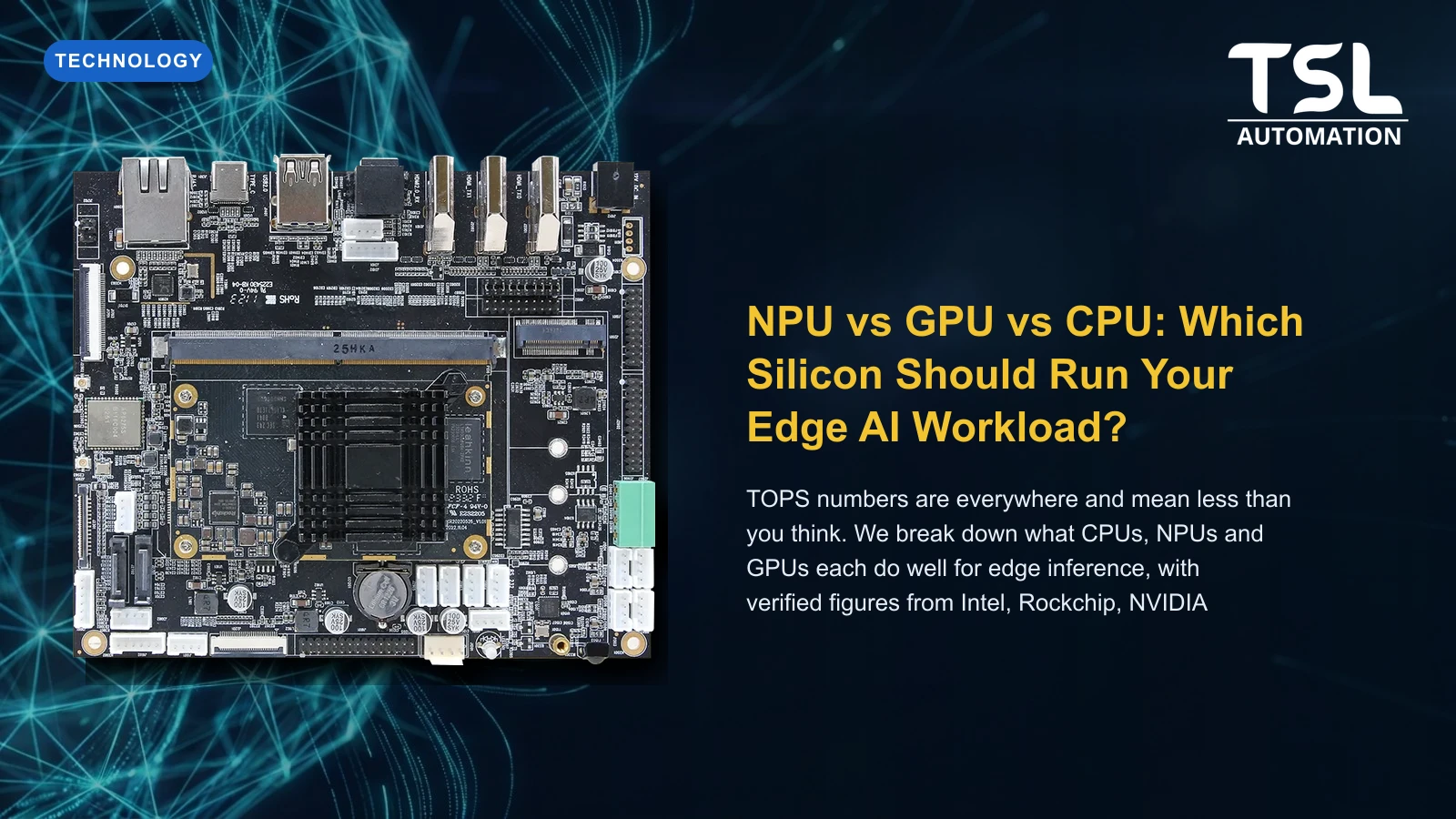
Table of Contents
Why does the silicon choice matter so much?
Because edge AI budgets are real money now. The edge AI hardware market reached $26.14 billion in 2025 and is forecast to hit $58.90 billion by 2030, a 17.6% CAGR (MarketsandMarkets, 2025). Pick silicon that is too small and the line outgrows it in a year; too big and you paid GPU money to count bottles. The good news: the three classes, CPU, NPU and GPU, divide the workload space more cleanly than the marketing suggests.
When is a plain CPU enough?
More often than vendors admit. Modest models on modest duty cycles, barcode reading with occasional OCR, a classification every few seconds, anomaly checks on sensor data, run acceptably on the same Atom and Celeron class processors already inside industrial box PCs such as the NUC-EHL. No extra hardware, no new thermal design, no second vendor.
The lever that makes CPUs viable is quantization. Google's LiteRT documentation measures full INT8 quantization shrinking MobileNet-v1 from 16.9 MB to 4.3 MB, roughly 4x smaller, while cutting latency from 124 ms to 64 ms on the same hardware (Google LiteRT docs). If your quantized model meets its cycle time on the CPU you already own, you are done, spend the savings elsewhere.
What does an NPU actually buy you?
Sustained inference without the watts. A neural processing unit is a fixed-function engine for the multiply-accumulate math neural networks are made of, and current examples show the scale: Intel's Core Ultra 200V platform delivers up to 120 platform TOPS, of which the NPU contributes 48 INT8 TOPS (Intel Newsroom, 2024; The Register, 2024). On the ARM side, Rockchip's RK3588 integrates a 6 TOPS NPU supporting INT4 through FP16 precision (Rockchip, official). Dedicated accelerator modules push efficiency further still, Hailo's Hailo-8 rates 26 TOPS at a typical 2.5 W (Hailo, official).
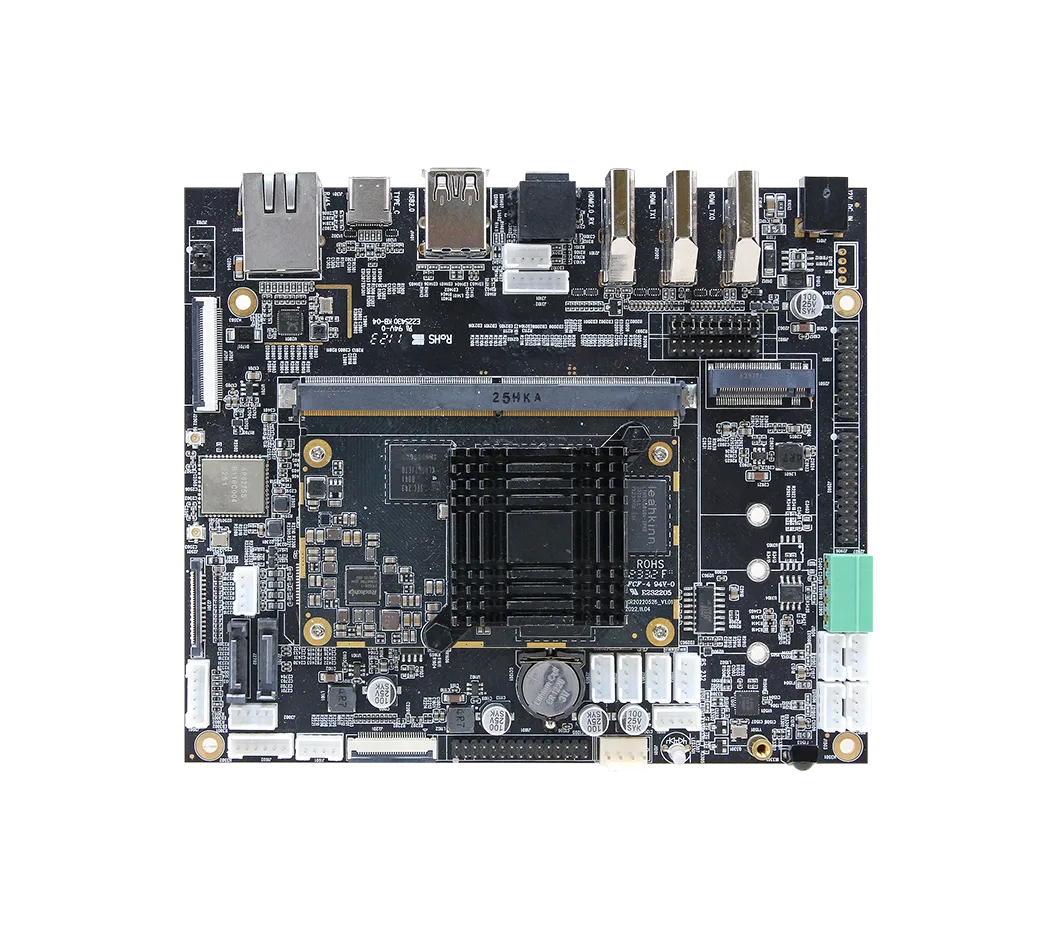
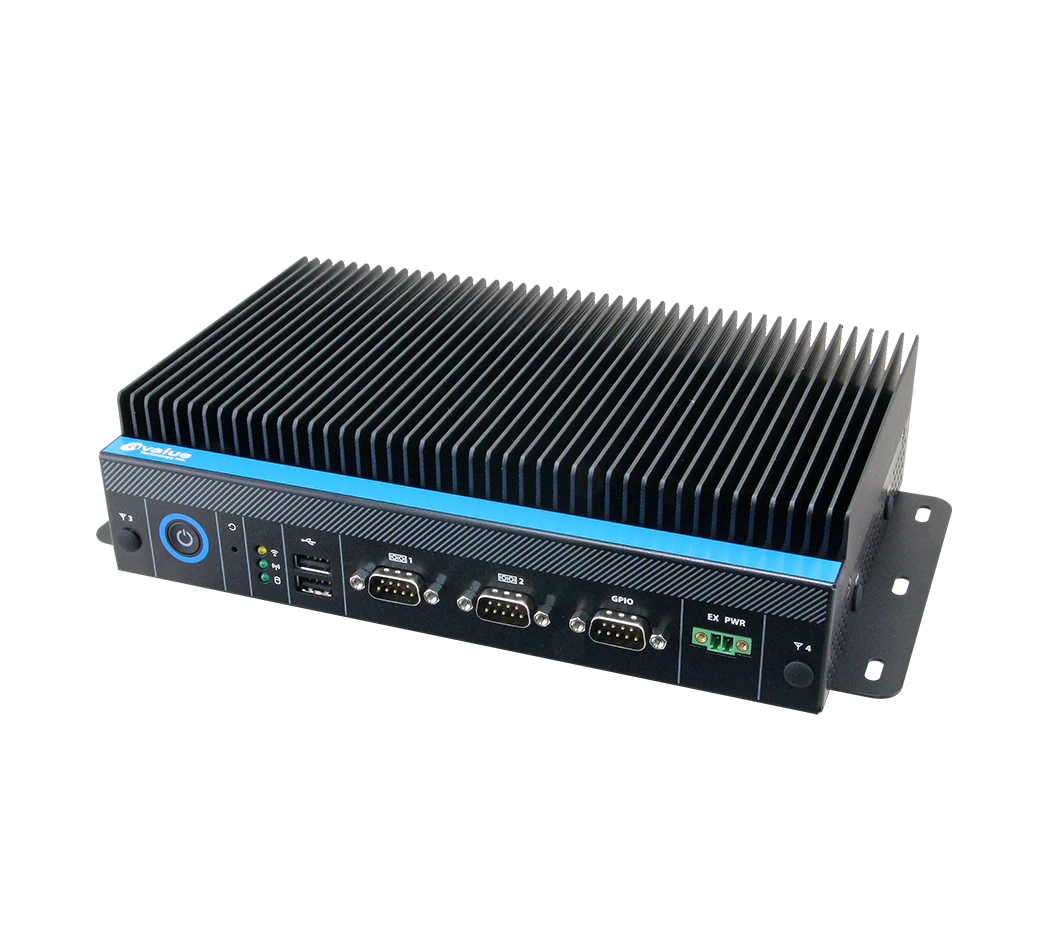
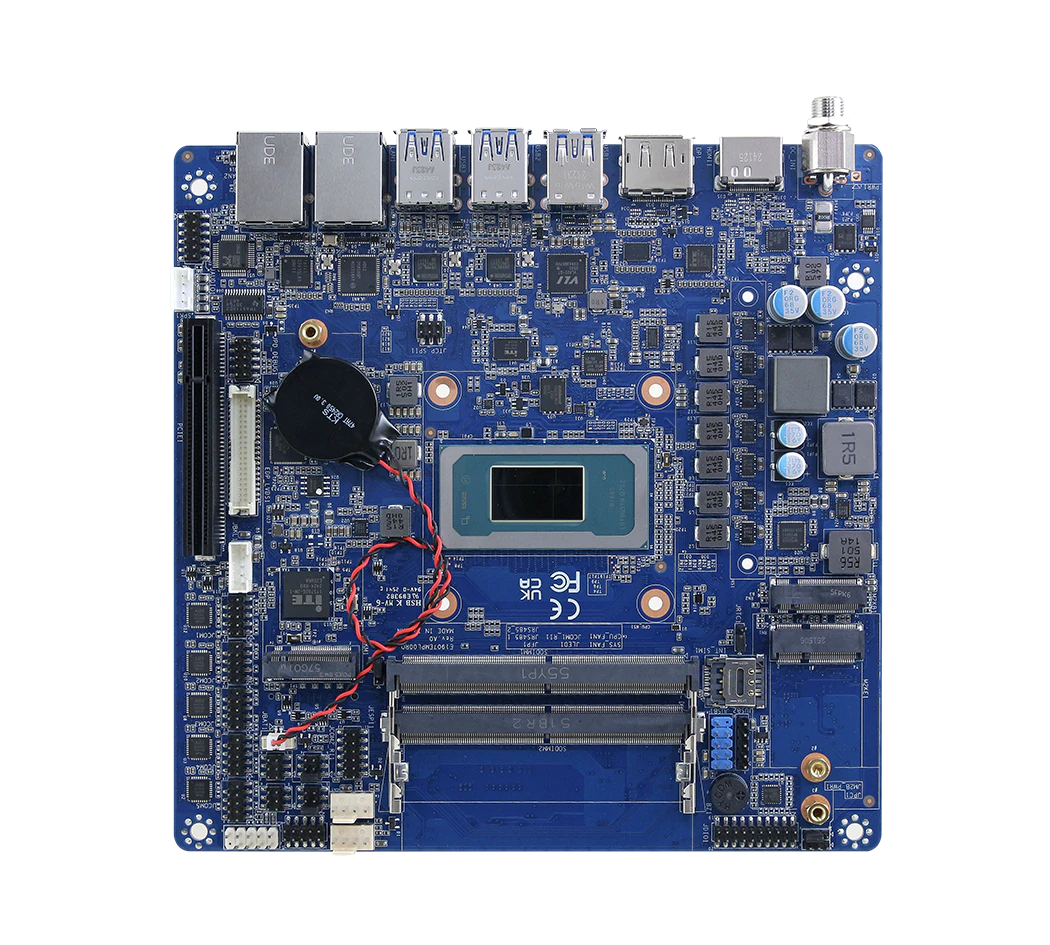
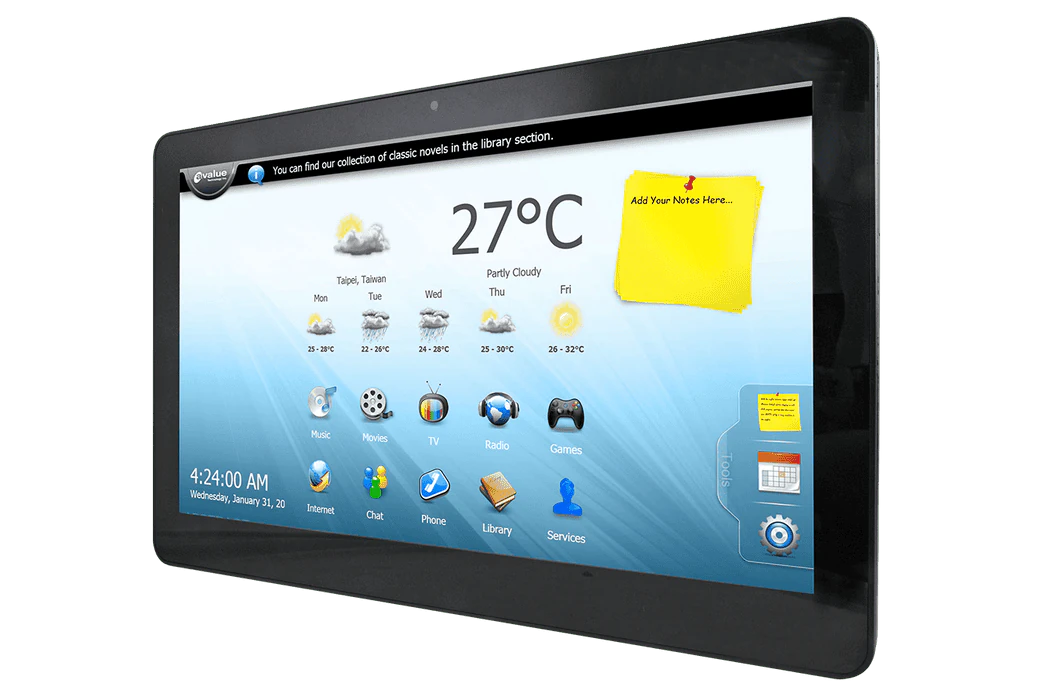
The practical meaning: one or a few continuous camera streams, defect detection, presence monitoring, quality gates, running all shift inside a fanless thermal envelope. In our catalogue that is the Core Ultra class, the EMS-ARH box PC, the APC-2146 panel PC and the EMX-PTLP board all carry integrated NPUs, and on ARM, the ACP-3588 brings the RK3588's 6 TOPS to a fanless SBC price point.
When do you need a GPU?
When the stream count or model size outruns fixed-function engines. NVIDIA's embedded Jetson Orin line illustrates the ceiling: up to 275 TOPS at 15 to 60 W on AGX Orin, 157 TOPS on Orin NX, 67 TOPS on Orin Nano (NVIDIA, official). Discrete PCIe GPUs go further again, at hundreds of watts.
GPUs earn that power budget in three situations: many simultaneous streams feeding one system, an AOI station watching a dozen cameras; large or unquantized models, segmentation networks, LLM-class workloads; and rapid iteration where CUDA's software maturity shortens development. The hardware pattern is a workstation with proper PCIe slots and cooling, in our range that is the HPS-ERSUTA class, specified with the GPU your framework needs.
How should you actually decide?
Work backwards from the line, not forwards from TOPS. Count the streams (one camera or twelve), state the cycle time (a decision every 50 ms or every 5 s), size the model (a quantized classifier or a segmentation net), and fix the enclosure budget (sealed fanless cabinet or ventilated rack). Then: light duty on one stream, CPU. Continuous vision on one to a few streams inside a fanless box, NPU. Many streams or heavy models with cooling available, GPU.
And treat TOPS as a doorway number, not a verdict. Ratings mix precisions (INT8 vs FP16 roughly doubles the count), assume ideal utilisation, and say nothing about your model's memory behaviour. The honest test is your model, quantized the way you will ship it, on the candidate hardware. That benchmark-first sizing is exactly how we approach it in our edge AI server buyer's guide, and if the edge-or-cloud question is still open, start with our edge vs cloud comparison. Bring us your camera count and cycle time, and we will shortlist hardware you can benchmark against.
Frequently Asked Questions
TSL Automation Solutions
Head of Marketing, TSL Automation Solutions
Sanjana covers industrial automation trends, product launches, and technology insights for TSL Automation Solutions, a Mumbai-based distributor of HMI, Panel PC, and embedded computing systems serving manufacturers across India and globally.
Need help choosing the right product?
Our team in Mumbai can recommend the right HMI, Panel PC, or embedded system for your application.
Contact TSL Automation