Edge AI vs Cloud AI in Manufacturing: Latency, Bandwidth and the Real Costs
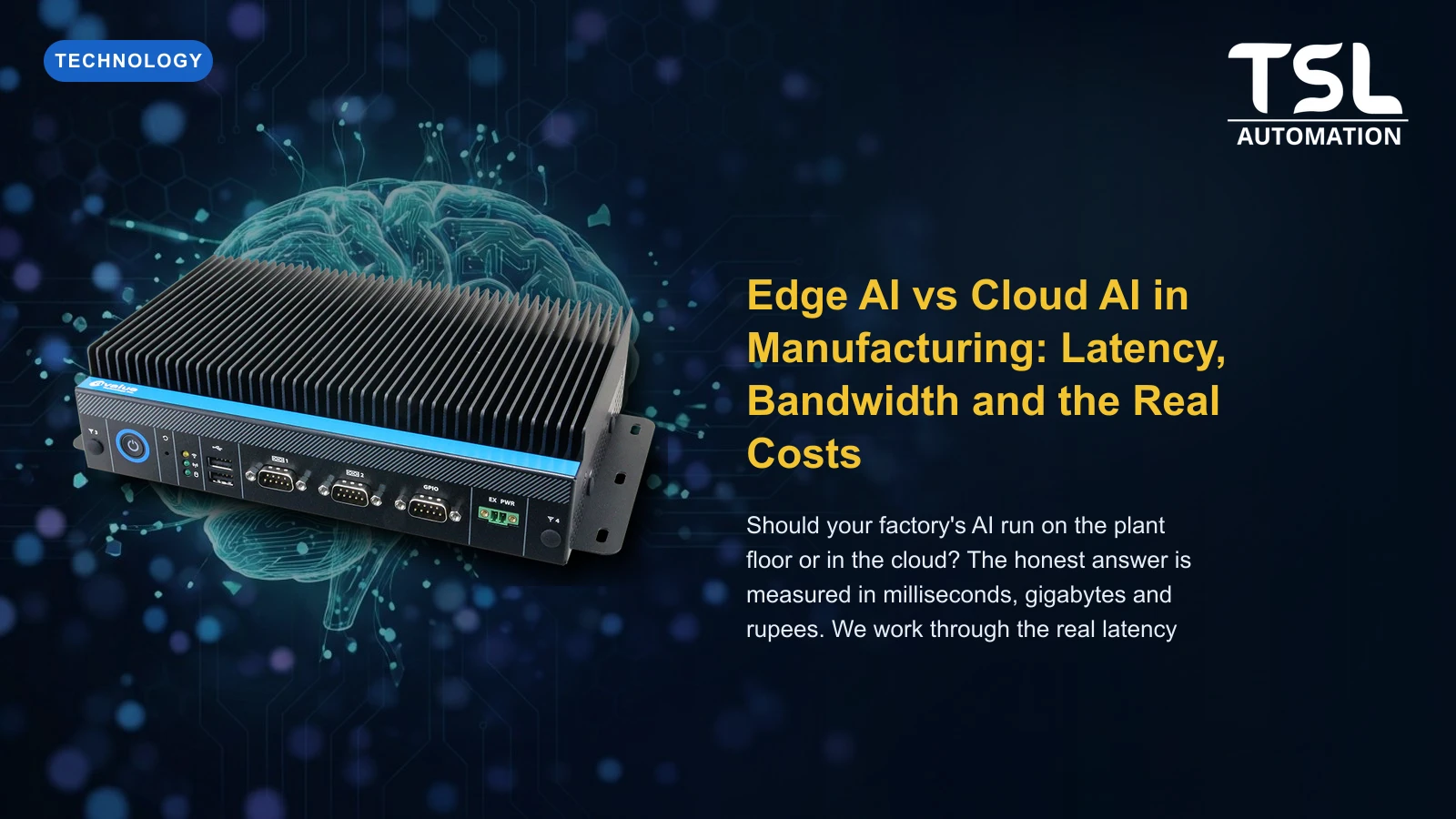
Table of Contents
What is the real difference between edge AI and cloud AI?
Where the inference runs. Edge AI executes the model on hardware at or near the machine, a box PC in the cabinet, a panel PC on the line. Cloud AI ships the data to a remote data center and returns the answer. The industry is voting with its budget: IDC puts worldwide edge computing spend at nearly $261 billion in 2025, heading for $380 billion by 2028, with AI workloads among the fastest-growing drivers (IDC, Mar 2025).
Neither side wins everything. The decision comes down to three measurable things: latency, bandwidth and what a wrong answer or a dropped link costs you.
How far away is the cloud, really?
Microsoft publishes measured round-trip times between its regions, and the geography is blunt. From Central India, a round trip to South India runs about 20 ms and to Jio India West about 29 ms, but West Europe is roughly 140 ms away and East US about 198 ms (Azure network latency statistics, 2026). And that is data-center to data-center on Microsoft's backbone, before your plant's last-mile link, VPN overhead and inference queue time are added.
A vision check that gates a reject arm at 60 parts per minute has a decision window of one second, spending 200 ms of it on a network round trip, twice that with processing, is workable until the link jitters. A safety interlock or a closed control loop cannot depend on it at all. On-device inference removes the variable entirely: the answer is computed centimetres from the camera.
The stakes of getting this wrong are well documented. Siemens' True Cost of Downtime study puts unplanned downtime at $1.4 trillion a year for the world's 500 largest companies, about 11% of revenues, with an idle automotive line costing up to $2.3 million per hour (Siemens/Senseye, 2024). ITIC's 2024 survey finds a single hour costs over $300,000 for more than 90% of mid-size and large enterprises (ITIC, 2024). An AI architecture that stops working when the WAN does is a downtime risk you chose.
What does streaming video to the cloud actually cost?
Run the math on a modest line. Take ten inspection cameras, each streaming H.264 at an assumed 4 Mbps, a common setting for 1080p industrial video. That is 40 Mbps continuous, roughly 13 TB per month. Cloud egress out of Asia regions on Azure is priced at $0.12 per GB after the first free 100 GB (Azure bandwidth pricing), and the upload direction demands a symmetric business link sized for the peak, not the average.
Compression helps but does not change the shape of the problem: Axis measures its Zipstream codec saving an average of 50% or more versus standard H.264 (Axis white paper), which still leaves terabytes moving every month, forever. Edge inference inverts the flow: the video stays on the plant network, and only results, a pass/fail, a defect crop, a count, travel upstream in kilobytes.
What about data privacy and uptime?
For many Indian manufacturers the deciding factor is not cost but control. Production video can reveal proprietary processes, customer parts and people, keeping it on-premises simplifies both confidentiality and compliance conversations. And an edge system keeps inspecting during an ISP outage, a cloud region incident or a maintenance window; results sync when the link returns. The line does not wait for the internet.
When does cloud AI still win?
Three places, and pretending otherwise would be dishonest. Training: building or fine-tuning models takes GPU horsepower a plant rarely owns, rent it in the cloud, then deploy the trained model to the edge. Fleet analytics: aggregating results from many lines or sites for dashboards and long-term trends is a natural cloud job, the data volume is tiny because the edge already reduced it. Non-real-time work: monthly audit passes or batch document processing have no latency stake. The pattern that wins in practice is hybrid: train in the cloud, infer at the edge, aggregate in the cloud.
How do you put edge AI on the floor?
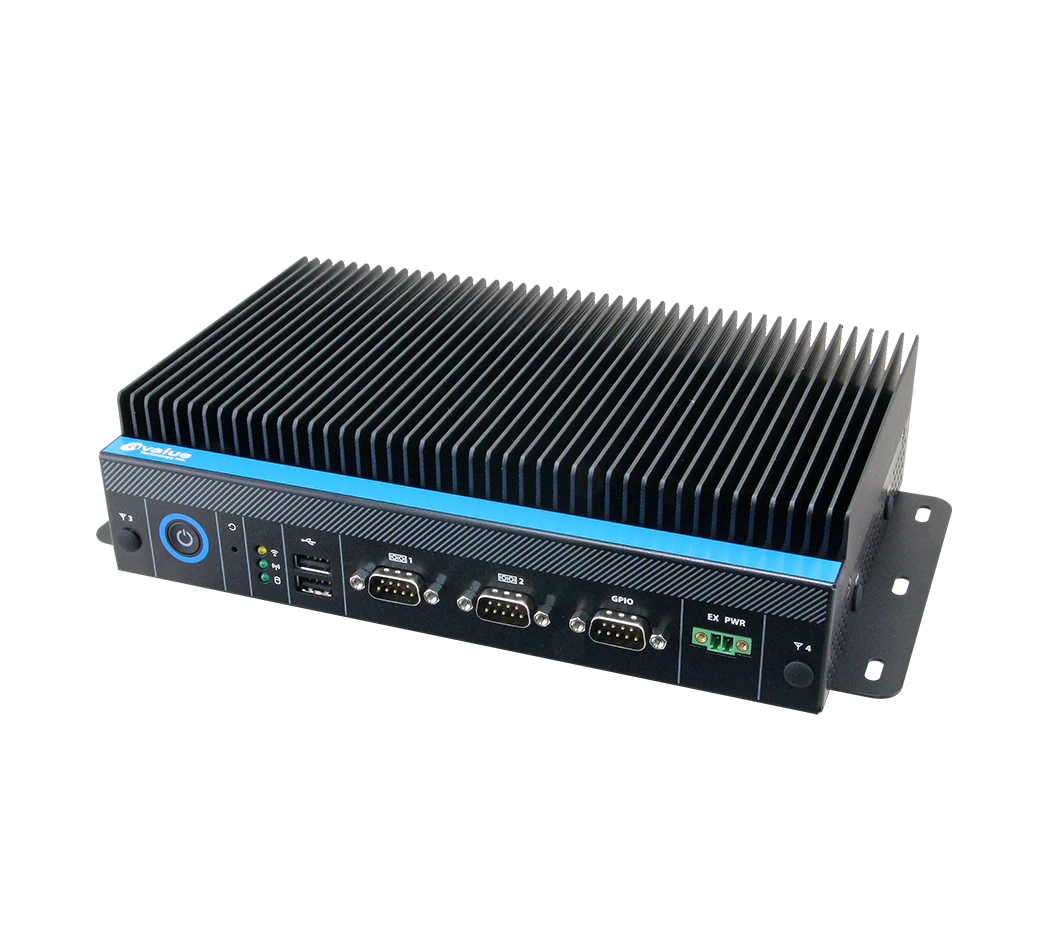
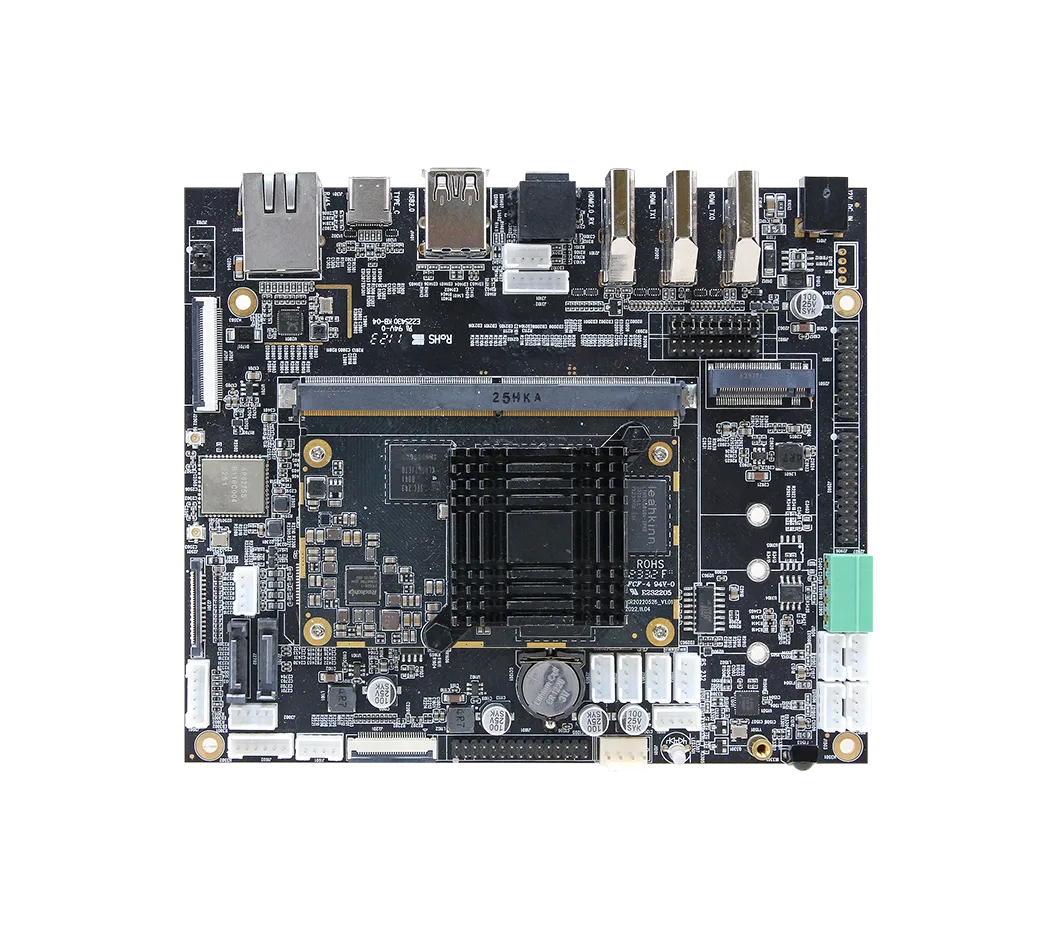
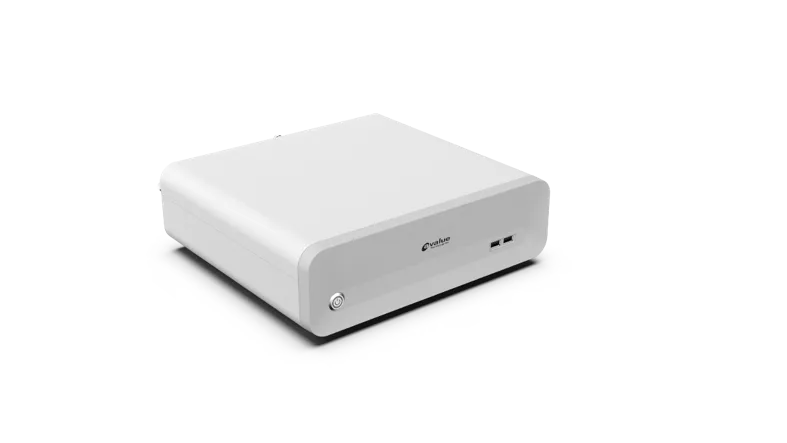
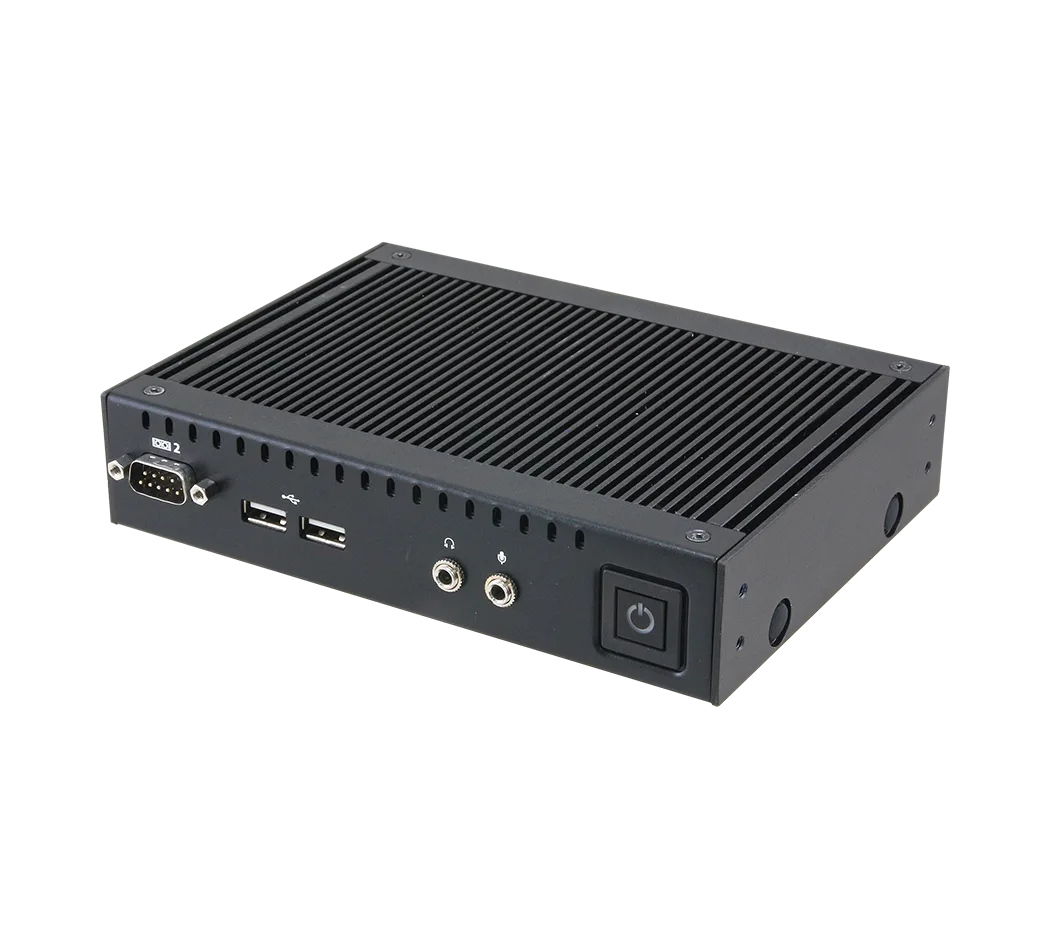
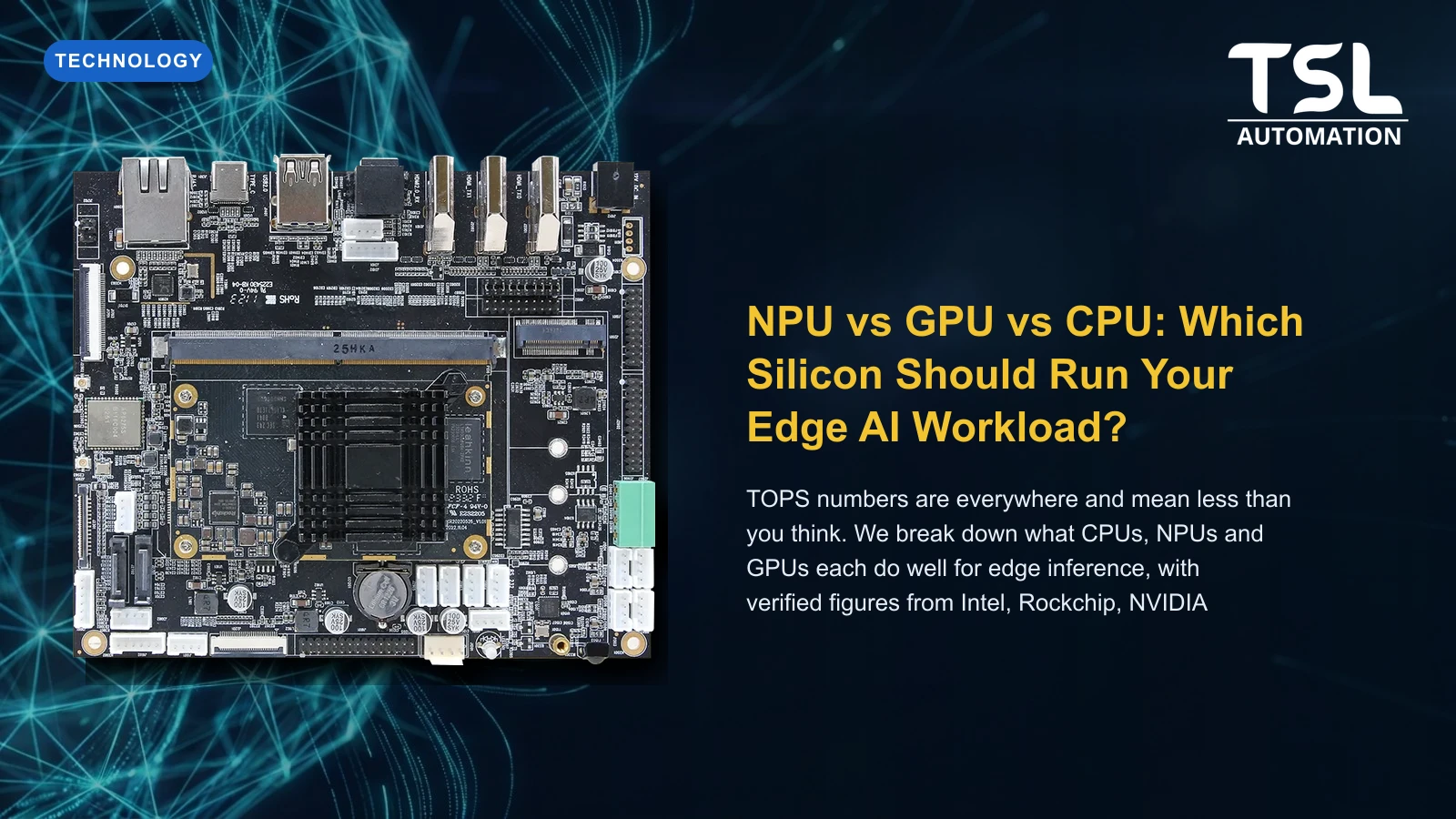
The hardware is the easy part these days. Compact fanless systems such as the Avalue EMS-ARH pair Intel Core Ultra processors with an integrated NPU for continuous vision inference, the ACP-3588 puts a 6 TOPS NPU on a fanless ARM board for cost-sensitive deployments, and PCIe-slot workstations take discrete GPUs when one system must watch dozens of streams. Which class fits your workload is exactly what our edge AI server buyer's guide walks through, and if you want the silicon-level comparison, see our guide to NPU vs GPU vs CPU for edge inference. Talk to us about sizing a pilot line, it is a smaller project than most teams expect.
Frequently Asked Questions
TSL Automation Solutions
Head of Marketing, TSL Automation Solutions
Sanjana covers industrial automation trends, product launches, and technology insights for TSL Automation Solutions, a Mumbai-based distributor of HMI, Panel PC, and embedded computing systems serving manufacturers across India and globally.
Need help choosing the right product?
Our team in Mumbai can recommend the right HMI, Panel PC, or embedded system for your application.
Contact TSL Automation