EU Cyber Resilience Act for Machine Builders: Reporting Now, Rules in 2027
Table of Contents
If you build machines in India and sell them into the European Union, the Cyber Resilience Act (Regulation (EU) 2024/2847) already applies to you in one respect: since 11 September 2026, manufacturers of products with digital elements must report actively exploited vulnerabilities and severe incidents through ENISA's Single Reporting Platform, with an early warning within 24 hours. The rest of the regulation, including the essential cybersecurity requirements and CE marking, applies from 11 December 2027. A machine with a networked PLC, HMI or industrial PC is the kind of product the Act is written for.
This guide sets out the verified dates, what the reporting duty asks of a manufacturer with no office in the EU, what changes in December 2027, and a practical checklist for machine builders.
Cyber Resilience Act key dates
| Date | What applies | Source |
|---|---|---|
| 10 Dec 2024 | The regulation entered into force | European Commission |
| 11 Jun 2026 | Chapter IV (Articles 35 to 51) on conformity assessment bodies | Article 71(2) |
| 11 Sep 2026 | Article 14 reporting of actively exploited vulnerabilities and severe incidents | Article 71(2) |
| 20 Jan 2027 | The separate Machinery Regulation (EU) 2023/1230 becomes mandatory | European Commission |
| 11 Dec 2027 | All remaining obligations: essential requirements, conformity assessment, CE marking | Article 71(2) |
The regulation was adopted on 23 October 2024 and published in the Official Journal on 20 November 2024. On 27 July 2026 the Commission published practical guidance for manufacturers, linked from its Cyber Resilience Act page.
Does the CRA cover a machine built in India?
The Act covers "products with digital elements" made available on the EU market. Article 3(1) defines that as a software or hardware product and its remote data processing solutions, including components placed on the market separately. Ireland's national cyber security centre puts it simply: any hardware or software that connects directly or indirectly to a network. Where the factory is located does not matter; what matters is whether the product is sold in the EU.
Some product groups are excluded, mostly because other EU laws already cover them. The exclusions relevant to equipment makers include:
- medical devices and in vitro diagnostic devices under Regulations (EU) 2017/745 and 2017/746;
- vehicles and their systems under the type-approval Regulation (EU) 2019/2144;
- products certified under the aviation safety Regulation (EU) 2018/1139;
- products developed exclusively for national security or defence;
- spare parts made to the same specification to replace identical components.
Machinery is not excluded. Recital 53 of the regulation deals directly with products that fall under the Machinery Regulation (EU) 2023/1230 and are also products with digital elements: their manufacturers must meet the essential requirements of both laws and follow both conformity assessment procedures. Meeting the CRA requirements can help show compliance with the machinery rules on protection against corruption and the safety and reliability of control systems.
If you sell a machine under your own name and it contains software or hardware that talks to a network (a PLC with Ethernet, an HMI with remote access, an industrial PC running your software, a cellular gateway for service), plan on being treated as the manufacturer of a product with digital elements. Article 21 also makes an importer or distributor a manufacturer if it sells the product under its own name or substantially modifies it, which is worth knowing if your EU partner rebrands your machines. Exactly where the line falls for a complete machine is a legal question; get a written view from your EU importer or counsel.
What the reporting duty requires since 11 September 2026
Article 14 creates two kinds of report, each in three stages:
| Stage | Actively exploited vulnerability | Severe incident affecting product security |
|---|---|---|
| Early warning | Within 24 hours of becoming aware | Within 24 hours of becoming aware |
| Notification | Within 72 hours of becoming aware | Within 72 hours of becoming aware |
| Final report | No later than 14 days after a corrective or mitigating measure is available | Within one month of the 72-hour notification |
Reports go through the Single Reporting Platform that ENISA launched on 11 September 2026. The platform routes each report to the CSIRT designated as coordinator and makes it available to ENISA, so one submission reaches all the relevant authorities; the Commission's reporting page explains how that CSIRT passes it on to the other Member States where the product is sold. Ireland's NCSC states that only notifications submitted through the platform count as meeting the legal duty, with email accepted only when ENISA declares the platform offline. Article 14(8) also requires the manufacturer to inform affected users.
Two points matter most to an exporter:
- It covers machines you have already shipped. Article 69(3) applies the Article 14 reporting duty to all products with digital elements placed on the market before 11 December 2027. Your installed base in Europe is in scope today.
- It works without an EU office. Article 14(7) says that a manufacturer with no main establishment in the Union reports to the CSIRT of the Member State where its authorised representative is established. Without one, it is the Member State of the importer handling the largest number of its products, then that of the distributor handling the largest number, and failing those the Member State with the most users.
Twenty-four hours is short for a company that first has to work out whether a vulnerability in a third-party component is actually exploited in its own machines. That is a process problem, and it is the part to fix first.
What changes on 11 December 2027
From that date, products placed on the EU market must meet the full regulation. The obligations machine builders will feel most are:
- Essential cybersecurity requirements (Annex I, Part I): no known exploitable vulnerabilities at sale, a secure by default configuration, the ability to fix vulnerabilities through security updates, protection from unauthorised access, and protection of data confidentiality, integrity and availability.
- Vulnerability handling (Annex I, Part II): identifying and documenting components and vulnerabilities, including a software bill of materials (SBOM) in a commonly used, machine-readable format covering at least top-level dependencies.
- A support period of at least five years (Article 13(8)), unless the product is expected to be in use for less time.
- Due diligence on third-party components (Article 13(5)), including open-source software, so that bought-in parts do not undermine the product's security.
- CE marking to show CRA conformity, enforced by national market surveillance authorities, as the Commission notes.
Article 69(2) limits the full rules for older stock: products placed on the market before 11 December 2027 fall under them only if substantially modified after that date. Penalties under Article 64(2) for breaching the essential requirements or Articles 13 and 14 reach EUR 15 million or 2.5% of total worldwide annual turnover, whichever is higher.
Machine builders also face the new Machinery Regulation, which becomes mandatory on 20 January 2027. The Commission lists cyber-safety provisions for compliance-relevant software and data and for safety control systems among its main changes. As recital 53 of the CRA makes clear, the two laws run in parallel, so plan the work once and document it for both.
A practical checklist for Indian machine builders
- Map the digital elements. For each machine model sold into the EU, list every networked part: PLC, HMI, industrial PC, gateway, remote-access modem, and your own software, with versions.
- Know your installed base. Record which EU customers have which software and firmware versions. Without this you cannot answer "are we affected?" inside 24 hours or inform users as Article 14(8) requires.
- Name a reporting owner and a deputy. Decide who watches vulnerability advisories for your components and who can submit an early warning on a Sunday.
- Find your coordinating CSIRT. Work through the Article 14(7) order. If you appoint an authorised representative (Article 18 requires a written mandate), its Member State decides.
- Arrange access to the Single Reporting Platform before you need it, and make sure more than one person can submit.
- Ask suppliers for their CRA position. For each controller, HMI and PC: support period, how they publish vulnerabilities, and how long BIOS and driver updates will be available.
- Start the SBOM now. It is a December 2027 requirement, but it is also the quickest way to tell within hours whether a newly exploited library is inside your machine.
- Fix the defaults. Remove shared factory passwords, close unused ports and services, and document the secure configuration you ship.
- Plan update delivery for machines without internet access: who builds the update, how it is signed and tested, and how the customer installs it.
- Check operating system lifecycles against the support period you will declare. A PC whose OS loses security updates in two years makes a five-year support period hard to honour.
- Brief your EU importer. Under Article 19 importers must check conformity before placing products on the market, so expect them to ask for your CRA documentation well before December 2027.
Where the industrial PC fits
No single component makes a machine compliant; the CRA looks at the product and the manufacturer's processes. Hardware choices do make some requirements easier to meet. UEFI Secure Boot stops unsigned code from loading at start-up, and a TPM 2.0 keeps keys and boot measurements in hardware for measured boot, disk encryption and device identity. Together they help with "protection from unauthorised access" and with proving an update came from you. Our article on Secure Boot and TPM in industrial PCs explains how the pieces work together, and what is industrial cybersecurity covers the wider plant view.
These Avalue models list a TPM 2.0 in their specifications:
| Model | Type | Security hardware (spec sheet) | Typical role on a machine |
|---|---|---|---|
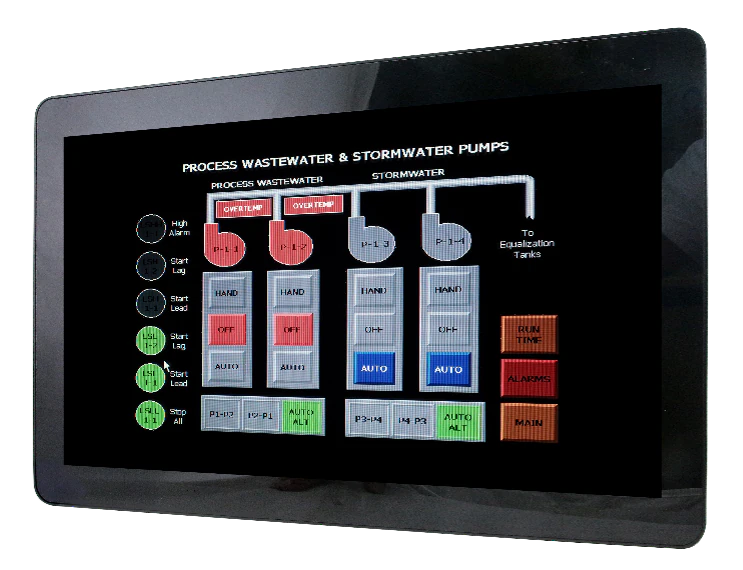
| ARC-21W42 | 21.5" Full HD PCAP fanless panel PC, 13th Gen Intel Core 3/5/7 | Onboard TPM 2.0 (Nuvoton NPCT754) | Operator station and HMI |
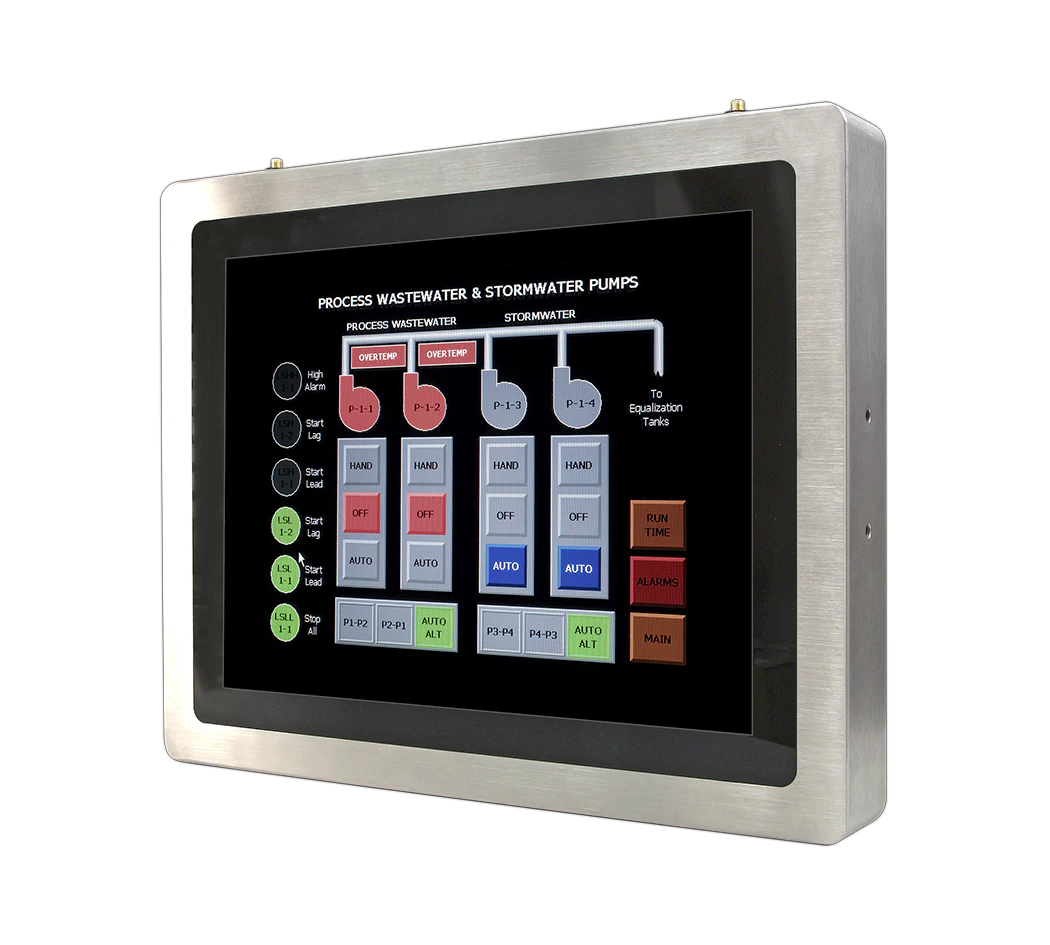
| SPC-1542 | 15" stainless-steel panel PC with M12 connectors | Onboard TPM 2.0 | Washdown HMI in food and pharma lines |
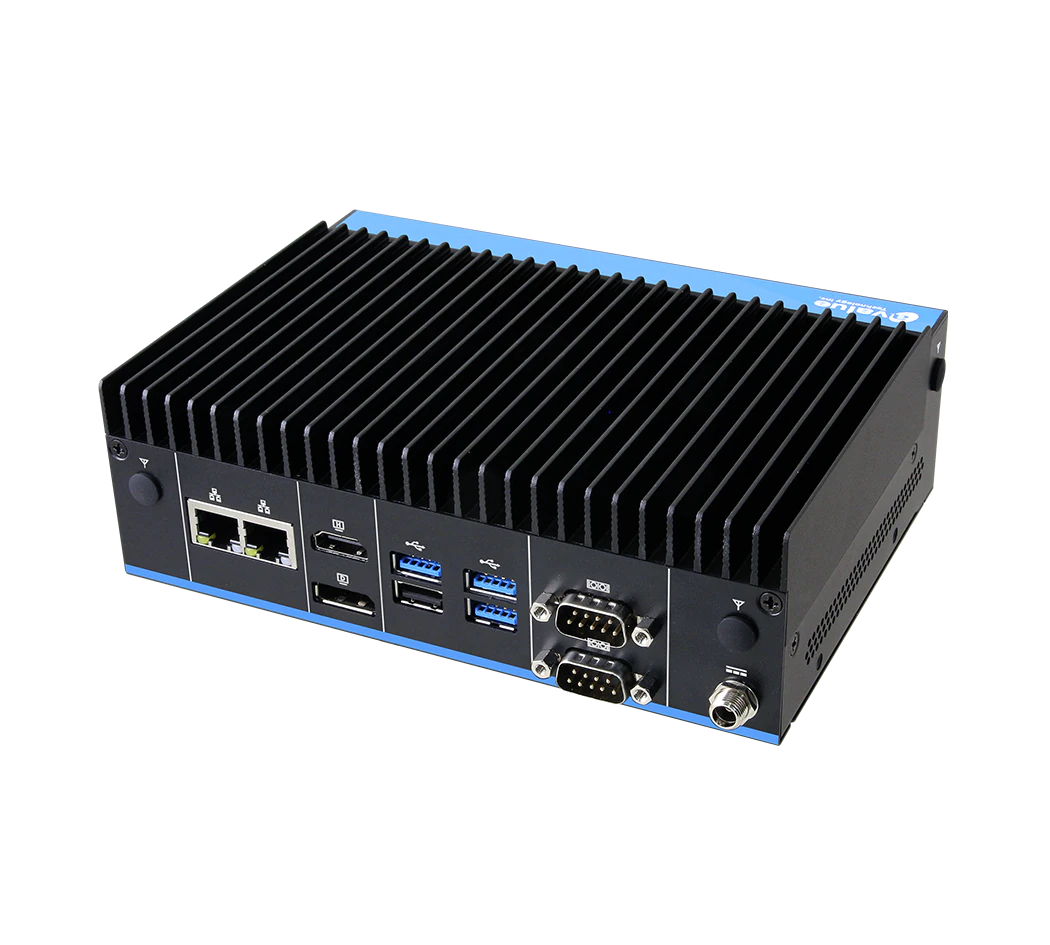
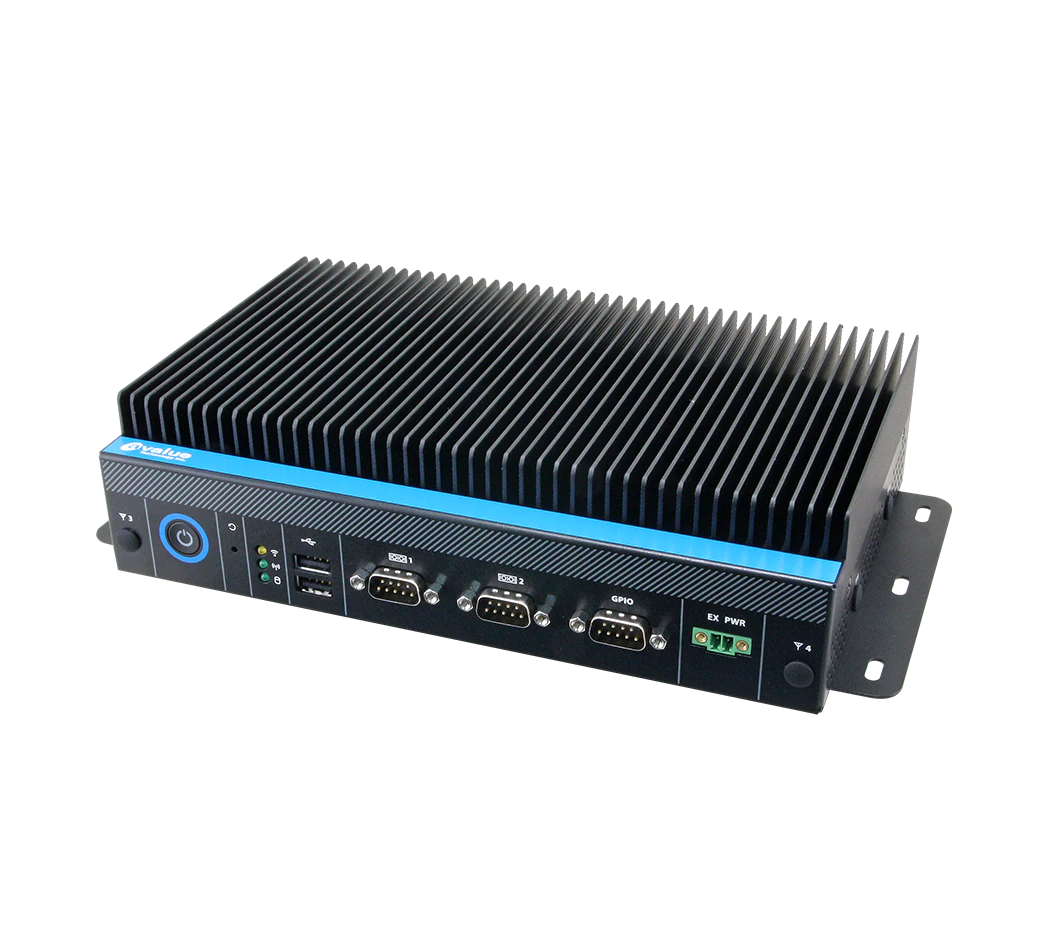
| EPC-TWL | Fanless compact box PC, Intel N150 default | Onboard TPM 2.0 | Edge gateway or cabinet controller |
| EMS-ARH | Modular system, Intel Core Ultra 7 255H / Ultra 5 225H | dTPM 2.0; optional Intel AMT | Vision and machine control |
| BMX-P550 | Barebone system, Intel Core i7-14700T, PCIe x16 slot | Onboard Infineon SLB9670 TPM 2.0 | Line PC with add-in cards |
| EQM-EHL-B1 | Qseven computer-on-module, Intel Celeron (Elkhart Lake) | Onboard TPM 2.0, listed for secure boot | Your own controller carrier board |
When you choose a PC for a machine that will carry a five-year support promise, ask the same questions you ask of software: how long the board will be made, how long BIOS updates will come, and which operating system releases it supports. Our guide to evaluating industrial PC vendors in India lists the questions to put to any supplier.
How TSL can help
TSL Automation Solutions in Mumbai has been an authorised Avalue and Cermate distributor since 2015 and ships worldwide. We can quote the Avalue ARC and SPC panel PCs, EPC and EMS box PCs, BMX barebone systems and EQM modules with TPM 2.0. The product finder and the compare tool help you shortlist by display size, processor and I/O.
Send us the model numbers and quantities and we will reply with availability and lead time within one business day.
Frequently Asked Questions
TSL Automation Solutions
Head of Marketing, TSL Automation Solutions
Sanjana covers industrial automation trends, product launches, and technology insights for TSL Automation Solutions, a Mumbai-based distributor of HMI, Panel PC, and embedded computing systems serving manufacturers across India and globally.
Need help choosing the right product?
Our team in Mumbai can recommend the right HMI, Panel PC, or embedded system for your application.
Contact TSL Automation